Weekly writing about how technology and people intersect. By day, I’m building Daybreak to partner with early-stage founders. By night, I’m writing Digital Native about market trends and startup opportunities.
If you haven’t subscribed, join 70,000+ weekly readers by subscribing here:
The Work of Knowledge in the Age of AI Reproduction
Back in 1935, Walter Benjamin wrote an essay called “The Work of Art in the Age of Mechanical Reproduction.”
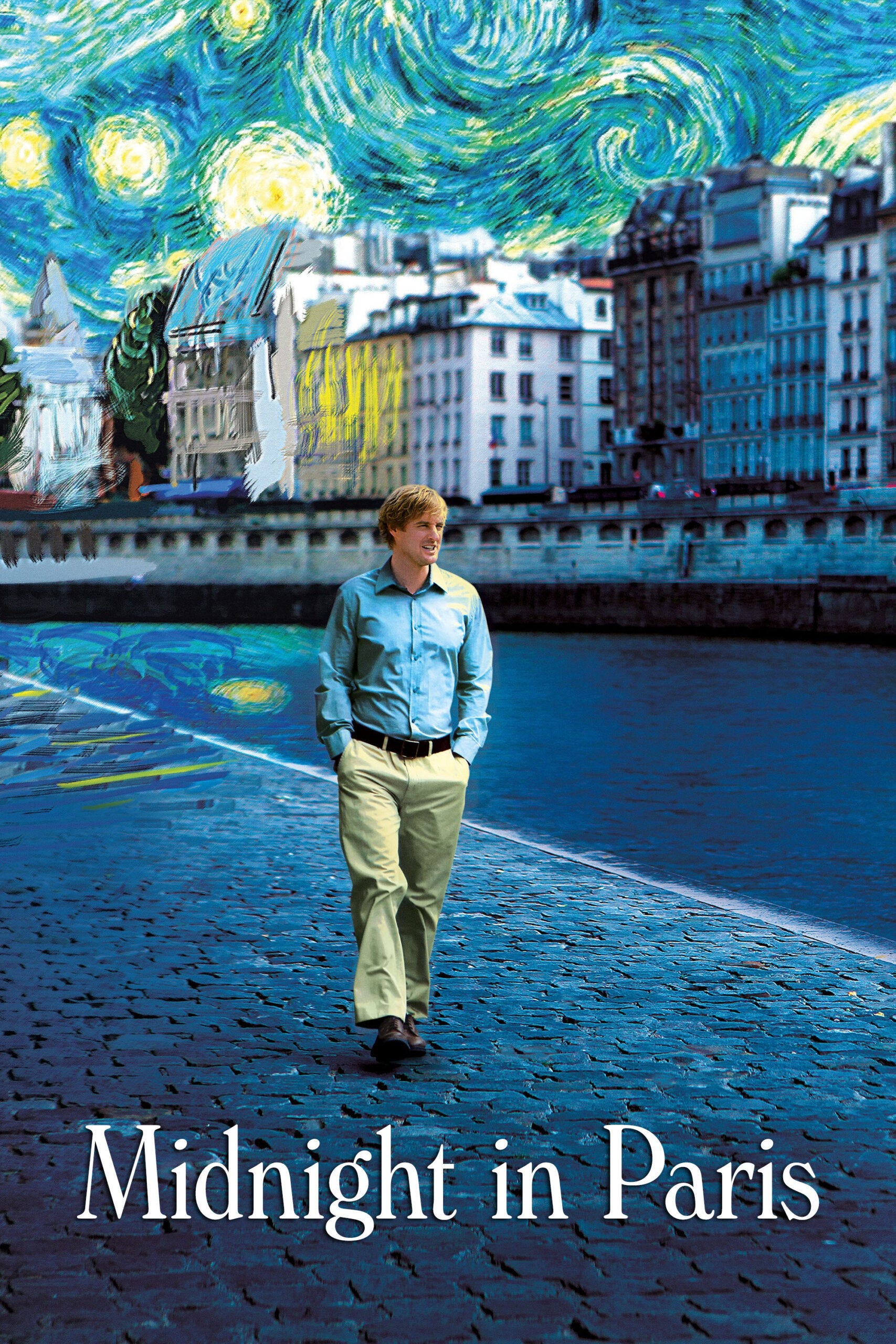
Benjamin argues that every original artwork has an “aura” that stems from its uniqueness, its physical presence, its irreproducibility. Starry Night, for instance, has aura: there’s only one copy, and it lives in the MoMA in New York. Technology, Benjamin continues, strips the aura from art through “mechanical reproduction.” A poster of Starry Night in your college dorm room, in Benjamin’s eyes, has lost its aura.
Benjamin’s main example is film. (The essay came out seven years after talking pictures—“The Talkies”—kicked off with 1927’s The Jazz Singer.) Unlike a painting, a film has no original; there’s no “real” print of Casablanca or The Godfather. The medium exists for reproduction, and as a result film embodied 20th century culture: culture that became mass-produced for global audiences.
This has obviously carried through to the 21st century, and Benjamin’s essay looks prescient in forecasting how art would evolve in the 1935-2026 period. Mass production and globalization led to changing definitions of art (for example: where’s the line between art and “content”?) and we got a sprawling, recursive remix culture.
We have Starry Night appearing in movie posters:
And we have enough Starry Night fan art to fill the MoMA:
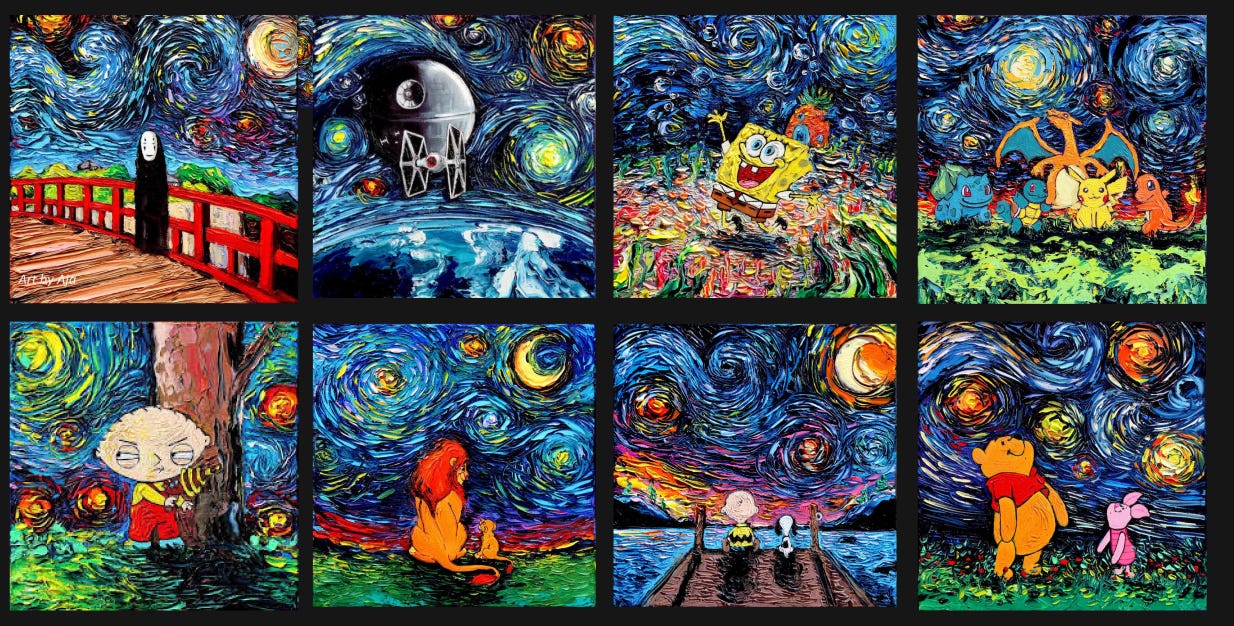
This would’ve confused a reader in 1935, but it’s second nature to us now. In many ways, the word “meme” is a direct descendant of the “art” Benjamin was predicting.1
Benjamin saw these changes as both a loss and a liberation. On the one hand, art was being pulled out of cathedrals and museums and into the hands of the masses. That was good: art was becoming more accessible. On the other hand, art (at least in Benjamin’s eyes) was losing some of its soul.
The Logical Parallel: AI and Art
These are the same debates we’re having today with AI. And again, there are good arguments on both sides. On the one hand, AI makes art more accessible, which is great. But AI probably does make art lose a little soul: a Midjourney work doesn’t have the same substance as a Van Gogh. AI, like 20th century media, gives art a broader, looser definition.
The best example of “AI reproduction” is the Studio Ghibli frenzy from OpenAI’s 4o release a year ago. All of a sudden, millions of people were generating images in the style of Hayao Miyazaki’s animation. Sam Altman briefly changed his X profile picture to a Ghibli portrait, and many of the internet’s famous memes got Ghibli-fied:
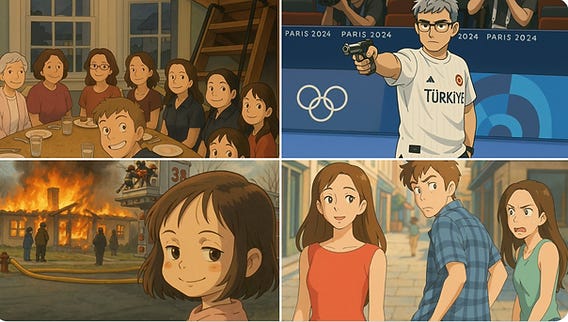
The Ghibli moment was, in many ways, delightful. But it also marked a major shift in the meaning of art. People dug up a Miyazaki clip from 2016 that showed him reacting to AI-generated animation. He says: “I strongly feel that this is an insult to life itself. I feel like we are nearing the end times. We humans are losing faith in ourselves.” Yikes! The Ghibli trend also had flavors of Benjamin’s other warning, that mechanical reproduction weaponizes art for politics (Benjamin was writing from 1935 Germany, watching the rise of fascism): the official White House X account tweeted a Ghibli-style image of a crying woman being deported by ICE.2
It’s easy to see parallels between “mechanical reproduction” and “AI reproduction” in how we treat art. My view is that “human-made” will become an important signifier, demanding a premium in the art markets, and we’re already seeing premiums placed on works considered more “pure”: Project Hail Mary’s filmmakers were widely lauded last month for not using a single green screen.
But I think the more interesting modern interpretation of Benjamin’s essay goes beyond art and centers around knowledge.
The Work of Art Knowledge in the Age of Mechanical AI Reproduction
Let’s rework the title of Benjamins’ piece by replacing the words “art” and “mechanical” with “knowledge” and “AI.”
While Benjamin was writing about art, his real subject was what happens when a previously scarce thing becomes infinitely reproducible. Art was a good example because in 1935, art was the canonical example of scarcity: there’s only one Starry Night, one Sagrada Familia, and so on. But in 2026, art has been mass-produced for a century; it’s no longer as scarce. The interesting collapse happening right now is around knowledge.
In the last century, print media, visual media, then the internet produced information, but the “aura” for knowledge (to use Benjamin’s terminology) stayed with institutions and credentialed humans. You could buy a poster of Starry Night for $20, but you couldn't get a McKinsey-quality deck for less than a million. You could watch Casablanca anywhere, but you couldn't get a Mayo Clinic diagnosis without flying to Rochester. And so on, and so on.
Today, knowledge is going through the same reproduction that art did a century ago. I would argue that you or I can make a McKinsey-quality deck with Claude in an afternoon—no offense to McKinsey—and AI often outperforms top doctors on benchmarks. This has all happened in the past few years, or even months. (To be precise: what's collapsing is the artifact of knowledge, not the judgment behind it. Claude can produce the McKinsey deck, but not the read on which partner needs to see it, or which slide to lead with in the room. The artifact is the easy part and, increasingly, the cheap part.)
Again, reproduction is both good and bad, depending whose perspective you take. A kid in Lagos has the same tutor as a kid on the Upper East Side (good). A junior analyst’s three years of training are compressed into a Claude prompt (good for most people, but maybe not the analyst). A worker who spent her entire career learning to read x-rays or underwrite commercial real estate loans or draft M&A contracts (pick your example of a hard-earned skill) finds AI able to do her job in seconds (good for many people, but certainly not for the employee!).
The question becomes: when the cost of knowledge collapses to zero, what happens?
We can look back at what happened to art over the last century. The art market essentially barbelled. The long tail exploded, with millions of people making a living as artists on the internet. And the top end concentrated and increased in value: Basquiats sell for $100M+, a Da Vinci sold for $450M, etc. The middle got squeezed between a market rewarding mass distribution or singular provenance.
We’ll see something similar play out with knowledge; my crude comparison:
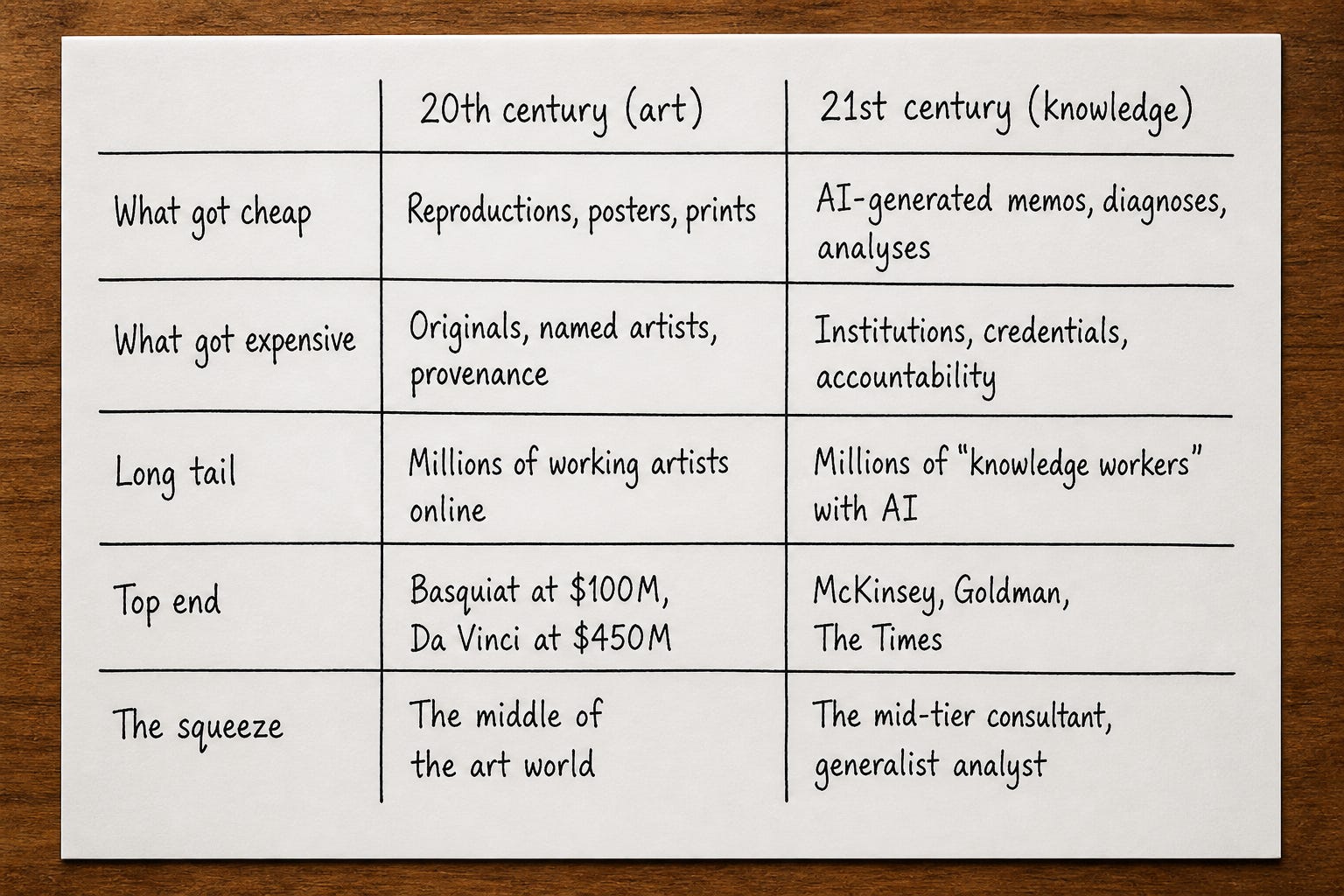
As in art, value will be dictated by provenance and accountability. We still need a doctor’s signature on a prescription, a lawyer’s name on a contract, an auditor’s stamp on the books. The reason: someone needs to be on the hook! Maybe one day that will be an agent (“agent malpractice insurance” will eventually be a product category) but we’re not there yet. Companies that have moats in the near-term will be the companies that pair knowledge with an earned human credential.
This is similar to what we see with the sheepskin effect in education. The sheepskin effect is the economic principle that degrees, rather than skills, determine income. If you go to Stanford and drop out after seven of eight semesters, you’d theoretically expect to earn 7/8 the income of a Stanford graduate; after all, you learned 7/8 of the skills. But instead, studies show you can expect to earn 50% as much. That final eighth doesn’t deliver half the learning; rather, completing the degree is a signal to employers.
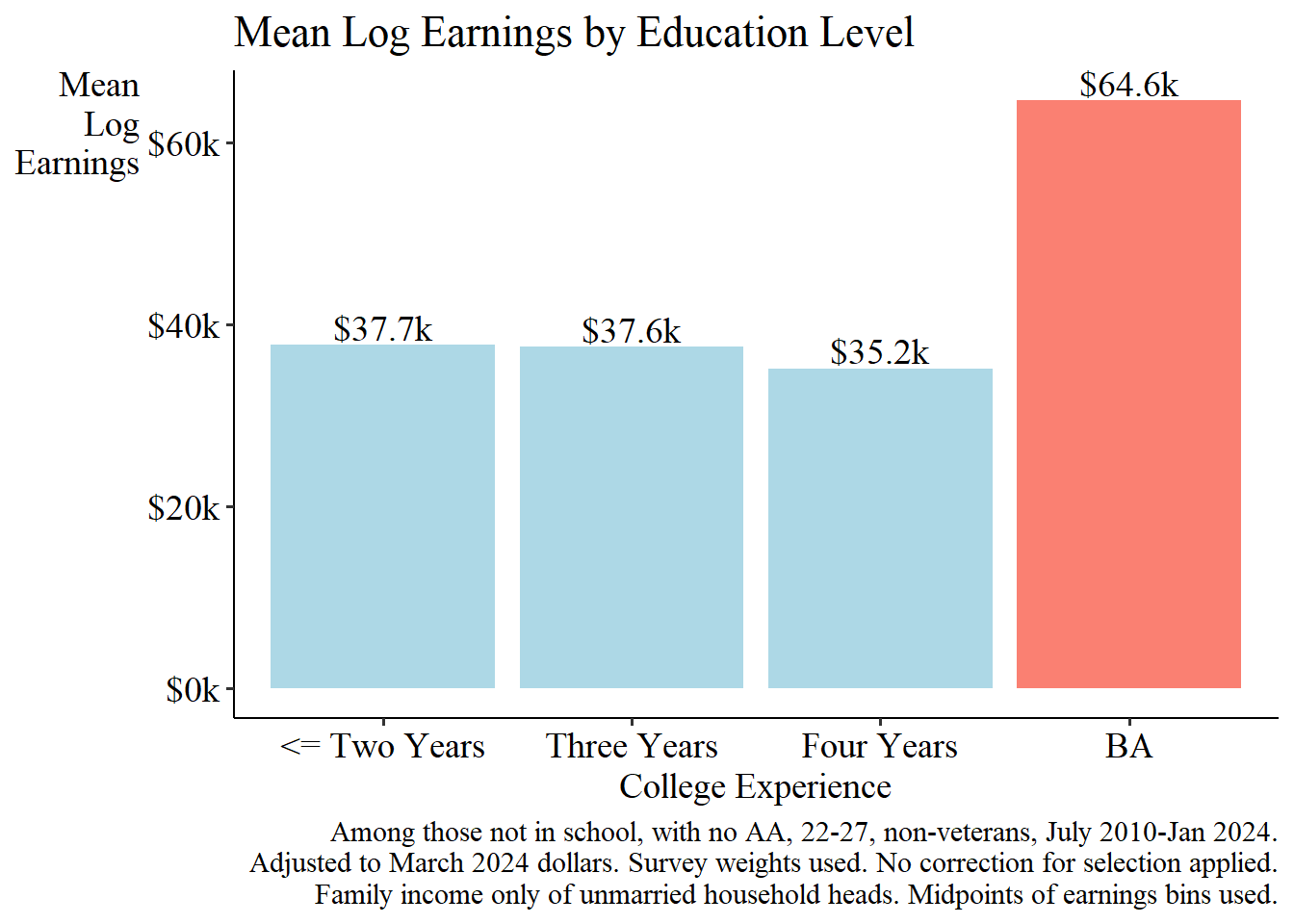
When AI collapses the skill side of the equation, signaling goes up in value. This is why McKinsey will be just fine. McKinsey is the Basquiat in this metaphor: it’s a credential that has a stamp of trust and quality. Same for Goldman in banking, PwC in audit, The Times in journalism. Huge swaths of the economy don’t sell knowledge more than they sell the willingness to put their name on something and bear the consequences if they’re wrong.
Benjamin’s argument is that mechanical reproduction democratizes art while also hollowing it out. He was right on both counts, and the same framework will extend to knowledge this century. The knowledge economy will look a lot like the art market post-1935: a long tail that explodes in volume and collapses in price, and a top end that becomes more valuable and more concentrated.
The word “meme” was coined by the evolutionary biologist Richard Dawkins in his 1976 book The Selfish Gene. Dawkins was looking for a word to convey “a unit of cultural transmission,” the cultural equivalent of a gene. He wrote:
We need a name for the new replicator, a noun that conveys the idea of a unit of cultural transmission, or a unit of imitation. “Mimeme” comes from a suitable Greek root, but I want a monosyllable that sounds a bit like “gene”. I hope my classicist friends will forgive me if I abbreviate mimeme to meme. If it is any consolation, it could alternatively be thought of as being related to “memory,” or to the French word même. It should be pronounced to rhyme with “cream”.
Dawkins went on to give examples of memes: songs, ideas, nursery rhymes, catchphrases, fashion trends. From the beginning, “meme” captured a broad definition of cultural transmission. The first internet meme is considered the sideways smiley :-) which was first used in 1982 by an American computer scientist. The concept was formalized a decade later, when WIRED called a “net meme” a “contagious idea” online.
Benjamin was writing in 1935 Germany, during the rise of fascism. He saw how the regime was using new mass media (film, photography, radio) to manufacture aura around the state. He called this the “aestheticization of politics”: wrapping ugly things in beautiful images so people would consume them as art rather than examine them as policy. Obviously this rhymes with the White House using Ghibli to feed its own deportation agenda.