

Weekly writing about how technology and people intersect. By day, I’m building Daybreak to partner with early-stage founders. By night, I’m writing Digital Native about market trends and startup opportunities.
If you haven’t subscribed, join 70,000+ weekly readers by subscribing here:
Why Does Everyone Hate AI?
If you want to get a feel for the zeitgeist, there’s one place to go looking: TikTok comments. And when you start reading TikTok comments, you’ll start to notice one sentiment again and again and again: a cutting, visceral hatred for AI.
Here are some comments I grabbed from a video last night:
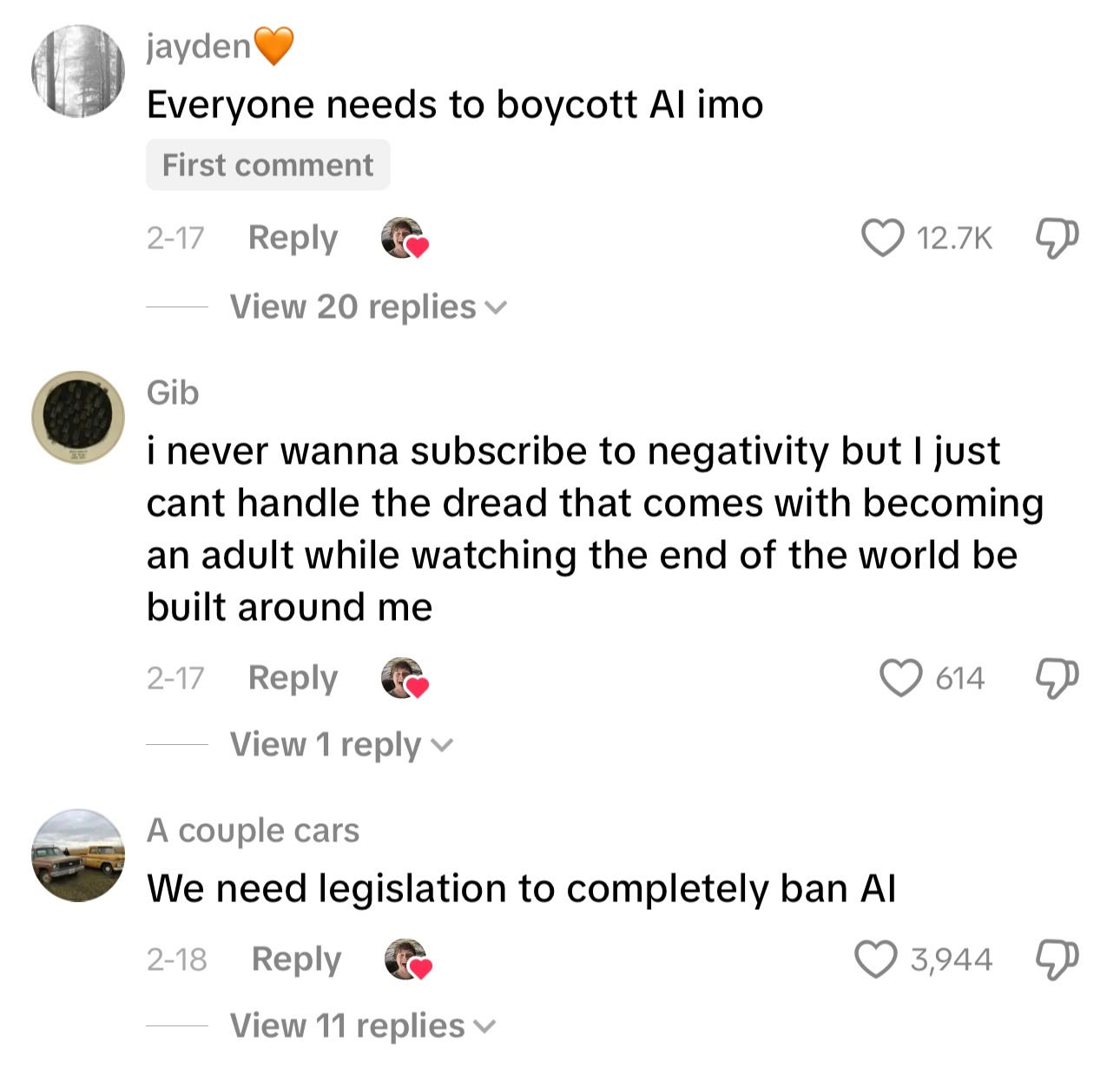
The vibes are…not good.
I’ve been thinking about this a lot lately. Digital Native is a publication about the intersection of people and technology. Right now, people seem to really loathe the technology of the day century. Clearly this tension presents challenges: it’s hard for AI to achieve mass adoption when many people downright refuse to use it.

I don’t think Silicon Valley fully appreciates the extent to which most Americans hate AI, and I think the Valley needs to think deeply about how to navigate the backlash.
Let’s tackle this piece in three parts:
A Brief History of Technology Skepticism
Why Is AI So Hated?
How to Approach the AI PR Fix
Without further ado…
A Brief History of Technology Skepticism
Technology has always had its skeptics. Even the humble art of writing (writing!) faced criticism: Socrates argued in Plato’s Phaedrus that the invention of the written word would “introduce forgetfulness into the soul,” leading to poor memory. He wasn’t totally wrong, but he was also overly alarmist. Moving beyond oral memory meant humans could build more complex and advanced thoughts, and thus more complex and advanced societies. Also: sometimes writing prevents forgetfulness (see: a grocery list). We also only know about Socrates’s perspective because Plato, uh, wrote it down 🤨. Funny how that works.
When the printing press came along in the 1500s, the Swiss scientist Conrad Gessner warned that information overload would be “confusing and harmful” to the mind. Two hundred years later with the arrival of the newspaper, a French statesman argued that newspapers would socially isolate readers and remove the uplifting group practice of getting news from the pulpit. Having never received my news from a pulpit, I can still say with confidence that I prefer reading The Times over coffee.
Fast forward to the 1900s and the automobile was under attack. Speaking of The Times: the paper ran a headline reading “Nation Roused Against Motor Killings” (you can still read it here), and one specific statistic became widely circulated at the time: in the first four years after World War I, more Americans died in car accidents than had been killed in battle in France.
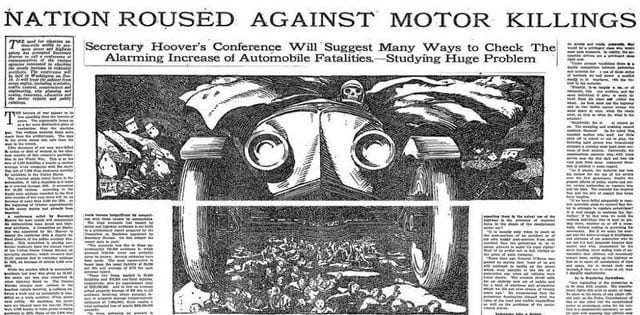
I tend to think we were right on this one: our kids will look back in disbelief that we hurtled through the air in 4,000-pound death machines. But the hand-wringing was also moot: the genie wasn’t going back in the bottle.
We could keep going. The phonograph was blamed for stripping the life from real, human, soulful performances; to paraphrase critics at the time, recorded music would kill the amateur musician and destroy musical taste entirely. (Hate to imagine what those critics would say about Suno.) Television, meanwhile, is probably the most famous example of controversial technology. Its nicknames are literally “the boob tube” and “the idiot box,” and critics said it would destroy community, shorten attention spans, and promote violence. It has probably done all three.
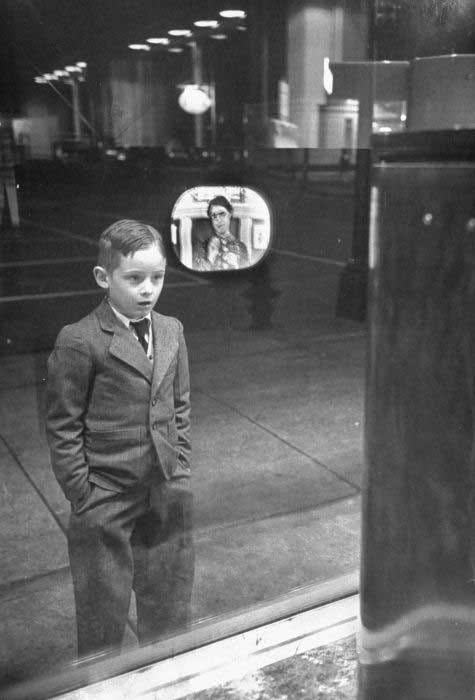
Enter this century, and internet and social media have again met backlash, some warranted, some unwarranted. The march of technological progress is steady and predictable. So is the human backlash to innovations. Humans have a long history of fearing their own creations.
Every new technology, of course, brings good and bad; technology is a mirror for society. In Marshall McLuhan’s words: “We shape our tools and thereafter they shape us.”
This all brings us to AI, certainly the most hated technology of my lifetime.
Why Is AI So Hated?
AI backlash follows the familiar patterns above, though I’d argue anti-AI sentiment goes beyond skepticism into hostility. There are a few reasons I see:
1) AI arrived at a uniquely bad time for tech’s public image.
Coming into the 2010s, tech was cool. Everyone wanted to work at Google or Facebook and play ping pong after eating their free lunch. There was a 2013 movie about Vince Vaughn and Owen Wilson interning at Google. That same year Sheryl Sandberg published Lean In. Marissa Mayer was revamping Yahoo, Apple’s spaceship campus was being developed, and WeWork was a high-flying real estate tech company. Vibes were good.
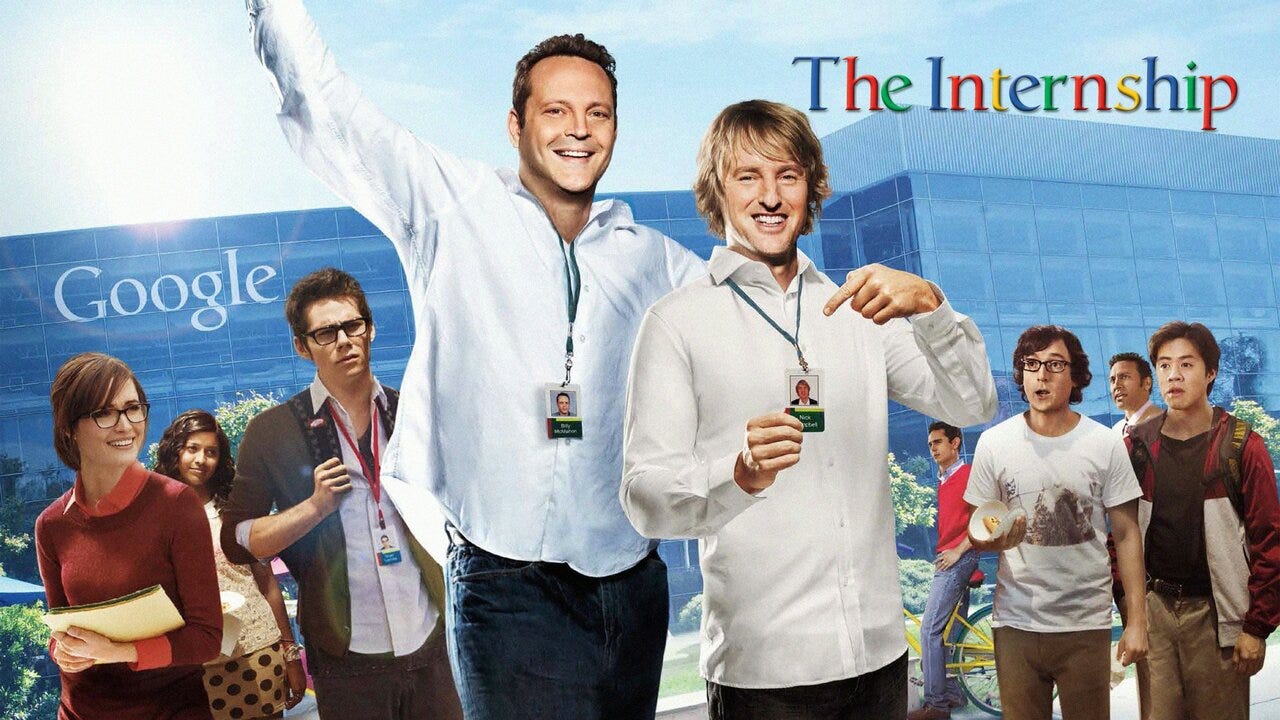
A decade later, by the time ChatGPT arrived, the public had turned on tech. Facebook had gone through the Cambridge Analytica scandal, new studies showed Instagram’s impact on mental health, and way too many people lost money on meme coins and expensive JPEGs. Vibes were rough.
Some studies have shown that views of AI correlate with views of social media. Countries that had more positive views of social media when ChatGPT launched have embraced AI more readily. Meanwhile, the country that views social media most as a threat to democracy…
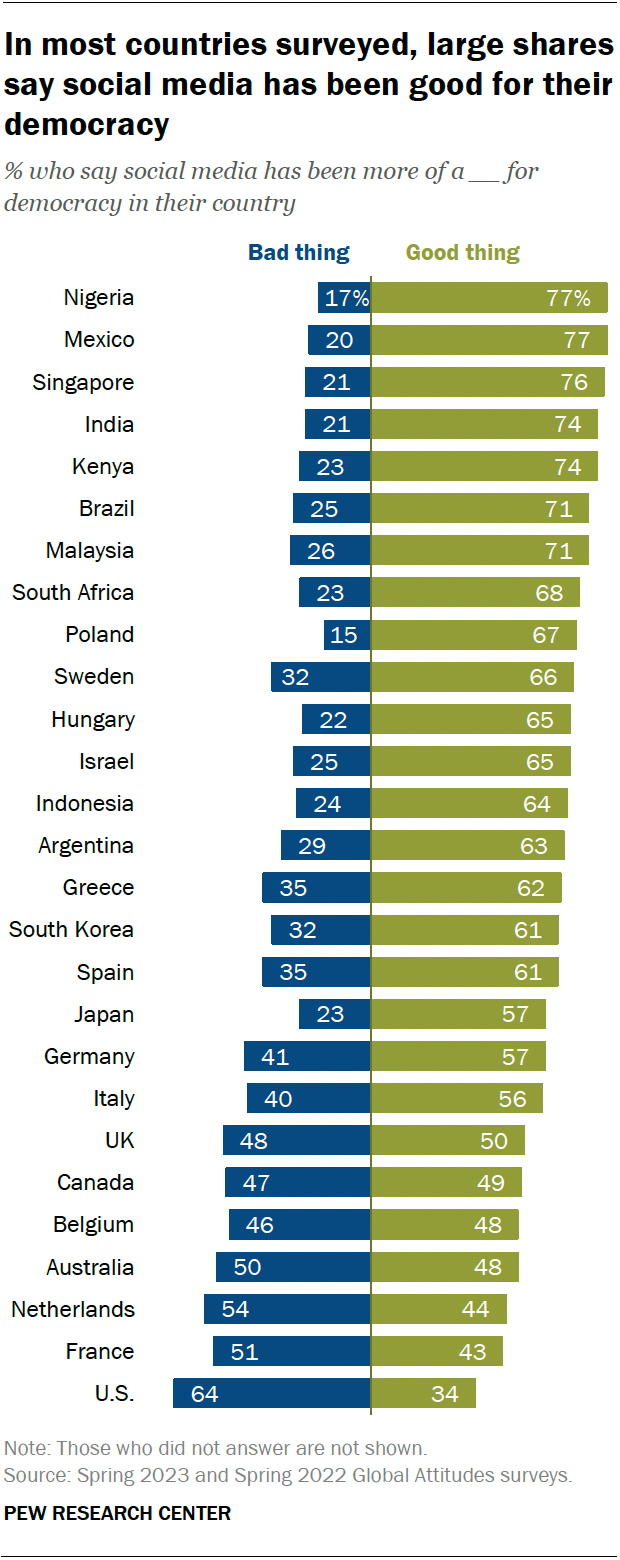
Put simply: AI had bad luck with its timing. People distrust tech.
2) The job fear is real and arrives at a time when people don’t feel good about the economy.
AI has also arrived at a rough economic moment. ChatGPT came out in November 2022, right when most Americans were feeling pretty lousy about the economy:
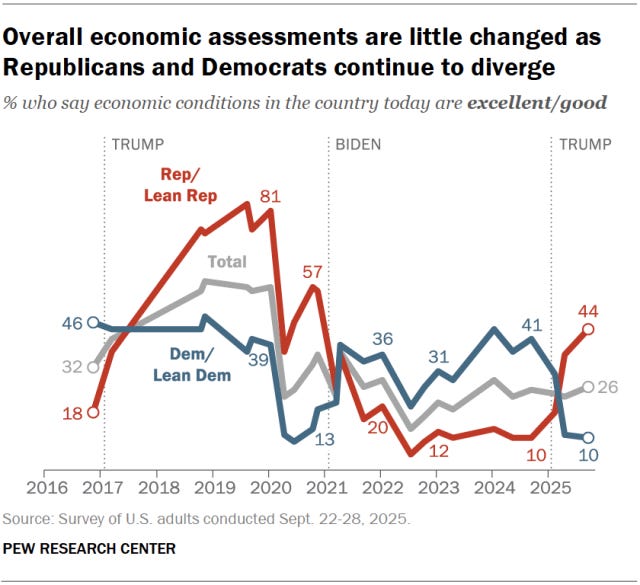
People weren’t exactly clamoring for a disruptive technology that might take jobs. When people hear the words “copilot” and “augmentation,” they think: layoffs. Again, bad timing for AI.
3) Creatives drive culture, and AI uniquely threatens creative work.
Some of the sharpest critiques of AI come in creative industries. From TikTok:

People on TikTok still decry Adrien Brody’s Oscar for The Brutalist last year, after the filmmakers revealed they used AI to improve Brody’s Hungarian accent in the film. Taylor Swift faced backlash for using AI-generated video in her promo for The Life of a Showgirl. An episode of The Studio (brilliant show) depicts an angry audience member yelling at Seth Rogen’s studio exec for using AI in the Kool-Aid movie, prompting Ice Cube to shout, “F*ck AI!”
And, of course, after the 2023 SAG-AFRA actors strike—the longest in Hollywood history!—we have AI actors like Tilly Norwood emerging. An actual headline in The Hollywood Reporter yesterday:
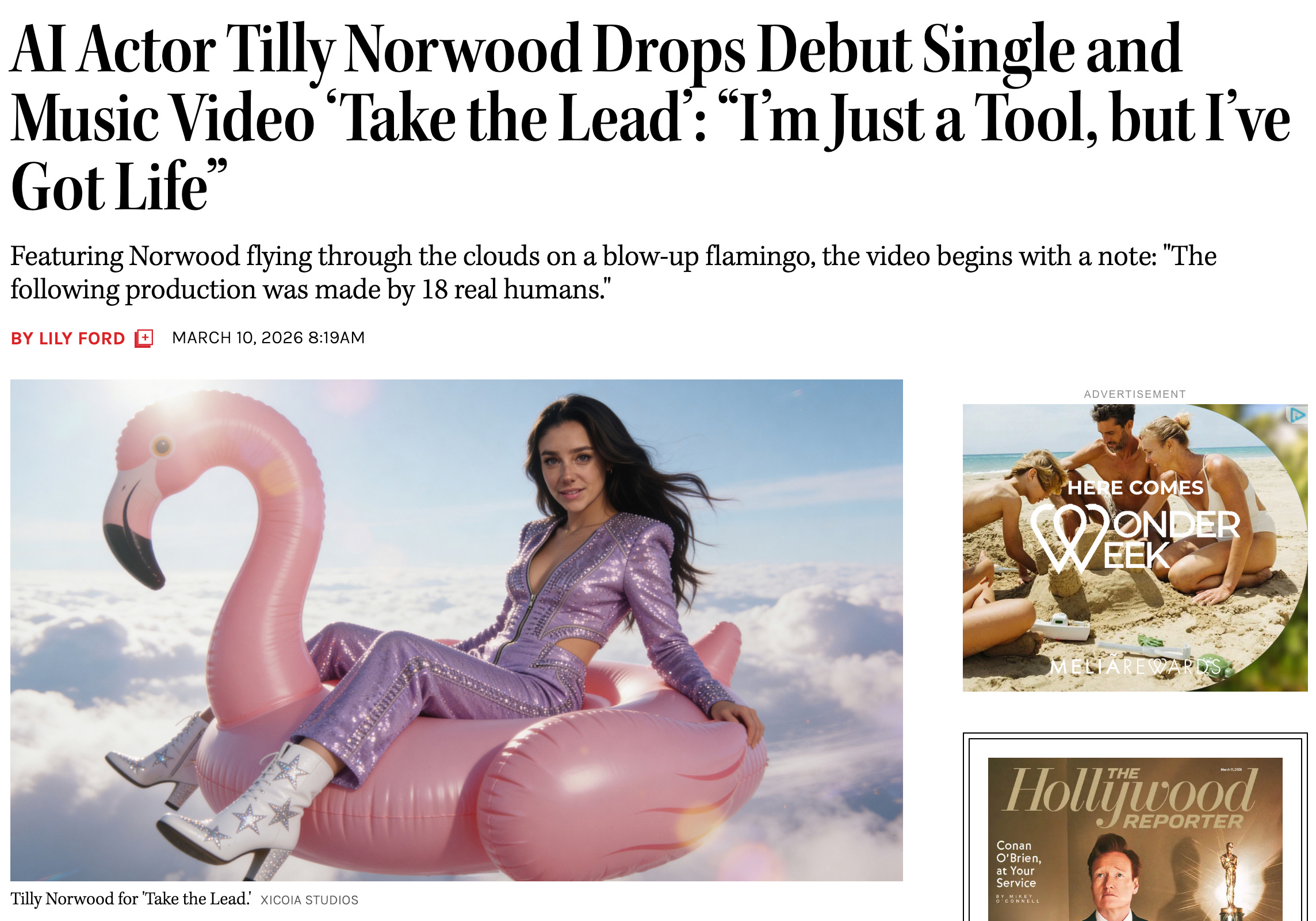
Creatives are the people who shape culture and public opinion. If AI is perceived as an existential threat to creative work, we see ripple effects across broader culture.
4) AI is inauthentic at a time when authenticity is in. AI is online at a time when IRL is in.
Vinyl sales are at a 30-year high, Gen Zs are buying film cameras, and flip phones (“dumb phones”) are making a comeback. There’s a massive cultural movement toward the analog, human, and tactile. AI, meanwhile, is synthetic. The boom in nostalgia is partly a reaction to AI mania, of course, but it also predates transformer models. Being offline is cool these days, and AI is as online as you get. When people crave realness, something that’s by definition fake will have the cards stacked against it.
5) AI is perceived as an attack on identity.
The fifth and final reason is the murkiest, but it’s also probably the most important. AI makes people feel inferior on the things they take the most pride in. What does that mean? Take Maslow’s Hierarchy of Needs: AI targets the top of the pyramid.
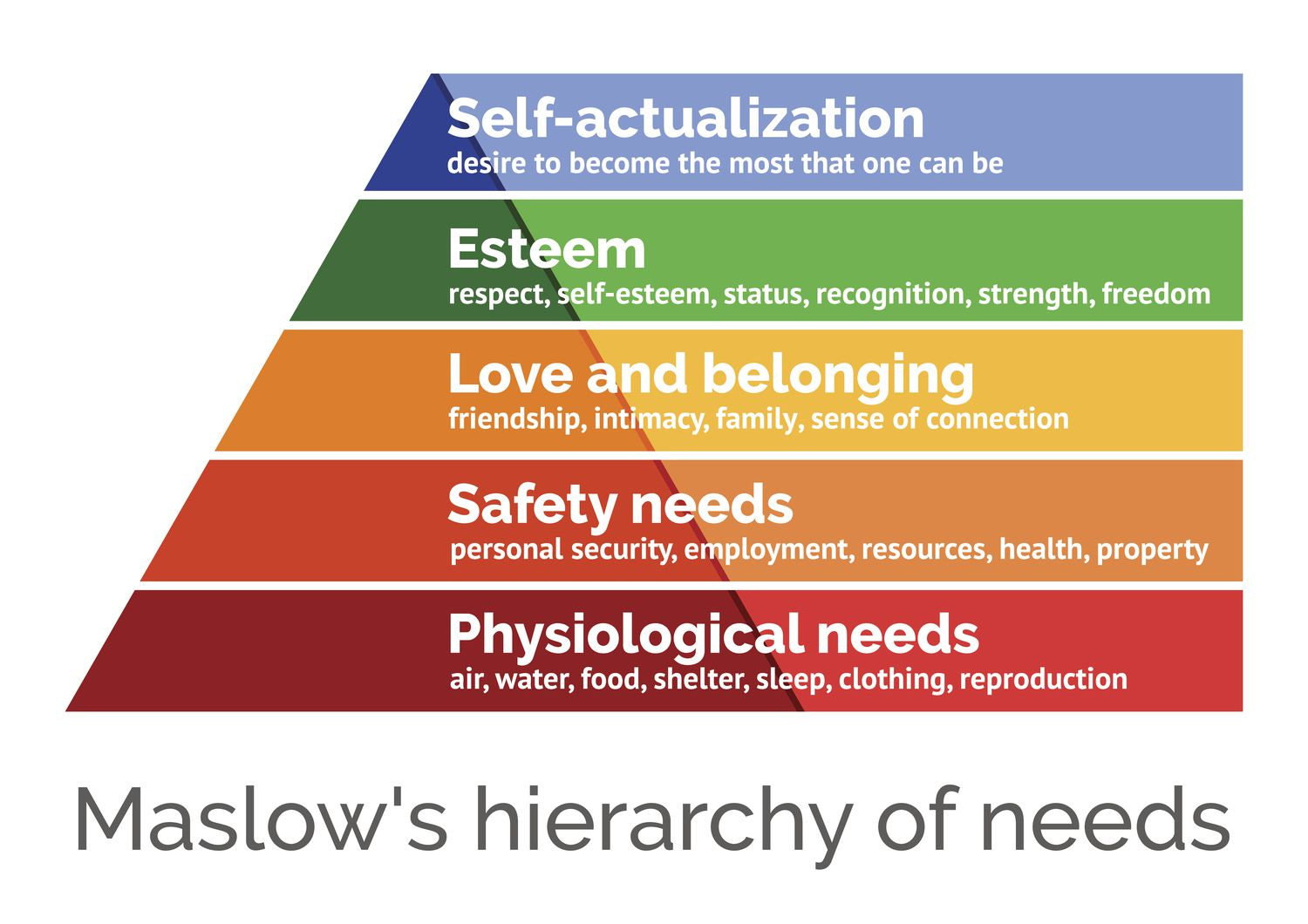
Previous waves of automation tended to attack the bottom of the pyramid. The steam engine and the assembly line, for instance, replaced physical labor (physiological survival work). Early software automated clerical, administrative work. Some people no doubt felt displaced by these technologies, but automation didn’t penetrate to what people consider their highest selves.
AI, meanwhile, climbs to the top of the pyramid and beings to dismantle it. Many people find their sense of self in how they show creativity—writing, drawing, music. Many people feel good at what they do—coding, legal work, customer support. AI encroaches on those identities, and that encroachment is happening rapidly. If a graphic designer built an identity around beautiful animations, and Midjourney can produce a “better” image in seconds…that’s tough.
I think this TikTok comment sums it up well:

TikTok commenters angry about AI tend to be knowledge workers, people at the top of the educational and economic pyramid who thought they were safe from displacement. AI comes for the most privileged, which inverts the history of technology.
How to Approach the AI PR Fix
Most tech backlash is reflexive fear of the new. AI backlash stands out as an accumulation of broken trust, economic anxiety, and a cultural moment primed to reject any new technology, let alone one that targets such deeply human spheres of life. But the genie isn’t going back into the bottle, and there are many incredible applications of AI; I’m as big an AI champion as you’ll find. So how do we fix the PR problem?
1) Start with the bottom of the pyramid.
The most compelling use cases of AI are the life-saving ones. Example: AI can detect cancer earlier than any radiologist. These use cases get at fundamental human wants and needs (staying alive!) and should be emphasized far more.
2) Lead with pain over capability.
Some of our Daybreak companies have quietly shifted from an .ai domain to a dot com. Founders have to be careful in how they communicate AI to customers. They should focus first on the problems they’re solving. Nurses don’t care whether they’re using Opus or Sonnet; they care whether the product makes them finish paperwork faster. Most tech industry announcements focus on what AI can do (model capabilities) rather than what problems AI can now solve for everyday people. The reframing should be: “This model has 1 trillion parameters” → “This product eliminates 4 hours of busywork.”
3) Change the messenger—no more VCs!
Maybe this is my sign to wrap up this essay. No one wants to hear from VCs 🙃 The loudest pro-AI voices are tech CEOs and VCs, two groups widely distrusted by the American public. If I were in charge of an AI marketing campaign, I would get actual customers to film the ad: farmers, accountants, home health aides. Even for OpenAI and Anthropic, real users would’ve made for more compelling Super Bowl commercials than vague inspirational montages (OpenAI) or subtweets of a competitor (Anthropic).
4) Acknowledge changes in labor markets then emphasize retraining and new jobs.
A lot of founders and VCs like to point to data that shows AI will create more new jobs than it destroys. This doesn’t matter to someone losing their job. The term Luddite originates from 19th-century English textile workers who organized raids to destroy weaving frames in the 1810s.
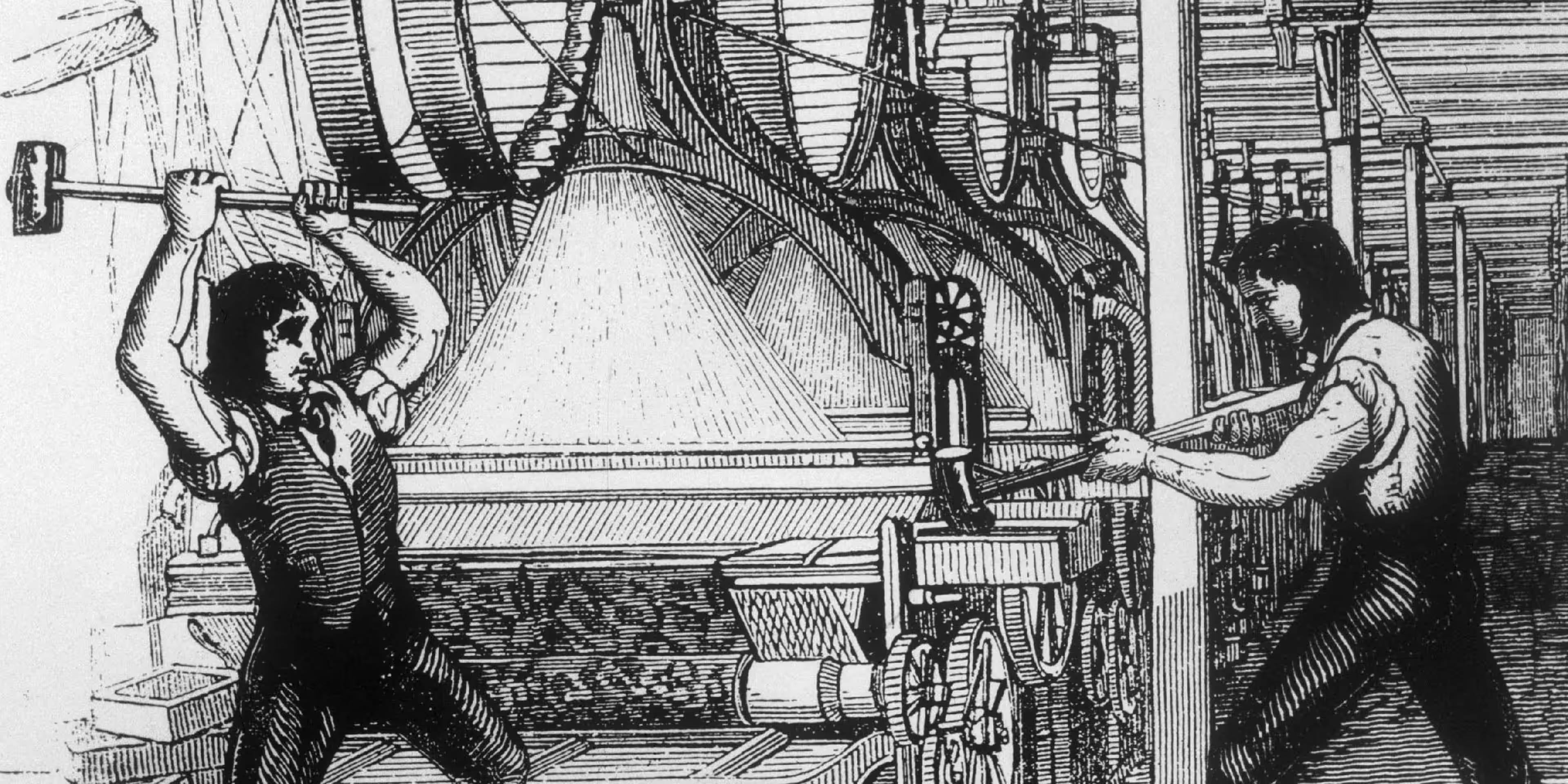
The textile workers probably realized that the new machines would eventually make society better off; they also realized that they would make their lives worse off right then and there. The proper way to handle a huge shock to the labor market is to acknowledge it, then effectively advocate for funding and programs to retrain workers.
5) Let humans be more visible in AI products.
If I were Pixar, I would run a contest: who around the world can make the best animated short using AI tools? The technology, in this exercise, levels the playing field: anyone with a great idea for a story came create something beautiful from their living room. The artist remains front and center. If we had more initiatives like this, we’d better appreciate how AI amplifies human creativity and acts as an equalizer. Just an idea!
Final Thoughts
Trump’s State of the Union speech last month was the longest in history, besting Clinton’s 2000 speech by 20 minutes. Yet in a nearly two-hour speech, Trump only mentioned AI three times.
Obviously there’s a lot going on right now; we’re at a uniquely vulnerable geopolitical moment (I highly recommend Ray Dalio’s essay on the world order breaking down). But we’re also in the early days of the largest technology shift in a generation, maybe ever. Three mentions in a two-hour speech signals how early we are.
Billions of people around the world still haven’t used AI. Here in the US, many are proud to have never used AI.

This is obviously untenable. Adoption is coming, rapidly, and it’s careening headfirst into the strongest anti-tech sentiment in a century (ever?).
Silicon Valley is smug in knowing that AI will win; of course it will. Technology always wins! But that smugness has meant bulldozing over a skeptical public, which leaves a trail of resentment that will come back to haunt the Valley. The cool thing about Silicon Valley is that it has a long and storied history of building technology for billions of people. It’s hard to do that if billions of people think you’re the villain.
Thanks for reading! Subscribe here to receive Digital Native in your inbox each week: