Weekly writing about how technology and people intersect. By day, I’m building Daybreak to partner with early-stage founders. By night, I’m writing Digital Native about market trends and startup opportunities.
If you haven’t subscribed, join 70,000+ weekly readers by subscribing here:
10 Charts That Capture How the World Is Changing
It’s that time again: time for another entry in the “10 Charts” series.
I try to do these once a quarter, and we’re overdue: our last entry was back in October. This is our 11th (!) entry, and you know the drill: I’m a visual learner and charts help me process information. Charts also happen to be an efficient way to show how the world’s changing.
We’ll tackle 10 charts that cover a wide range of topics:
Newspaper Stocks vs. Earnings
It’s Still the First Inning
Time Spent on AI Apps
Healthcare Is Driving Employment
Secondaries Reorient VC + Employee Returns
Gen Z: The Last Generation in the Alphabet
Peptides and Reta
The State of Gaming
Calls for More Agent Calls
The Citrini Selloff
Without further ado…
1️⃣ Newspaper Stocks vs. Earnings
This chart shows newspaper stocks vs. earnings. You can see that stocks plunged about five years before earnings fell, meaning that the market saw the writing on the wall well before it showed up in the P&L.
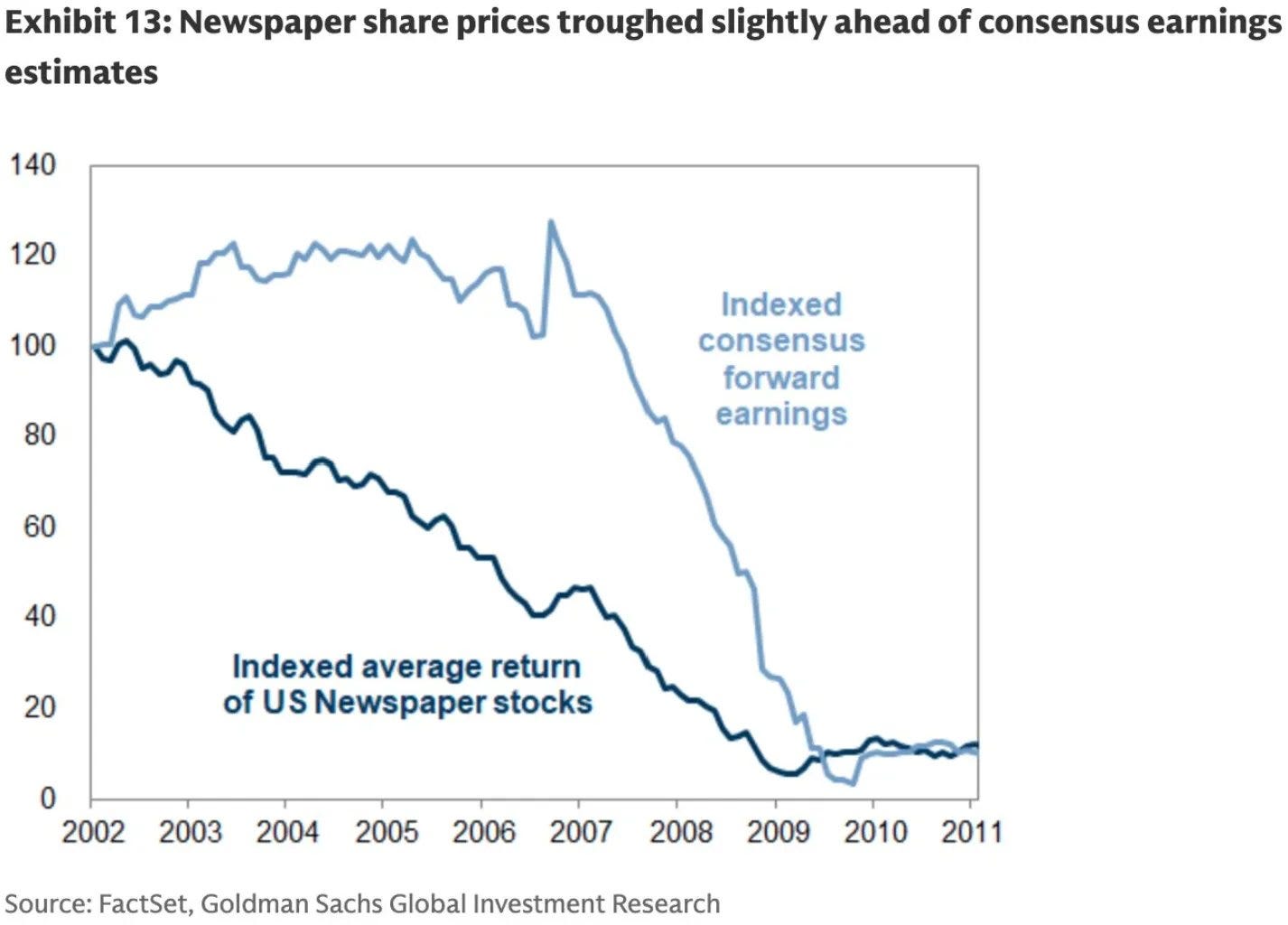
Sure, there’s some timing bias here; the drop in forward earnings coincides with the Great Recession. But this seems directionally accurate, with the market foreseeing the internet upheaving newspapers. We’re seeing this again now, with SaaS stocks plunging last month ahead of AI disruption.
As we wrote last week, the SaaSpocalypse will take time to play out. I was on a panel this week where a panelist said “The Campbell’s Soup company isn’t going to vibe-code their own CRM,” which was a clever way to put it. But the market is pricing in an eventual reality: compressed software profits, with a “new normal” of 70% gross margins vs. 90% gross margins.
On the topic of AI taking a long time to play out…
2️⃣ It’s Still the First Inning
Here’s a cool visualization of where we are in the AI adoption cycle. Each dot below represents 3.2M people. There are 2,500 dots which amounts to 8.1B humans.
Grey = 6.8B people who have never used AI
Green = 1.3B free users
Yellow = 15-35M paying users
Red = 2-5M coding users
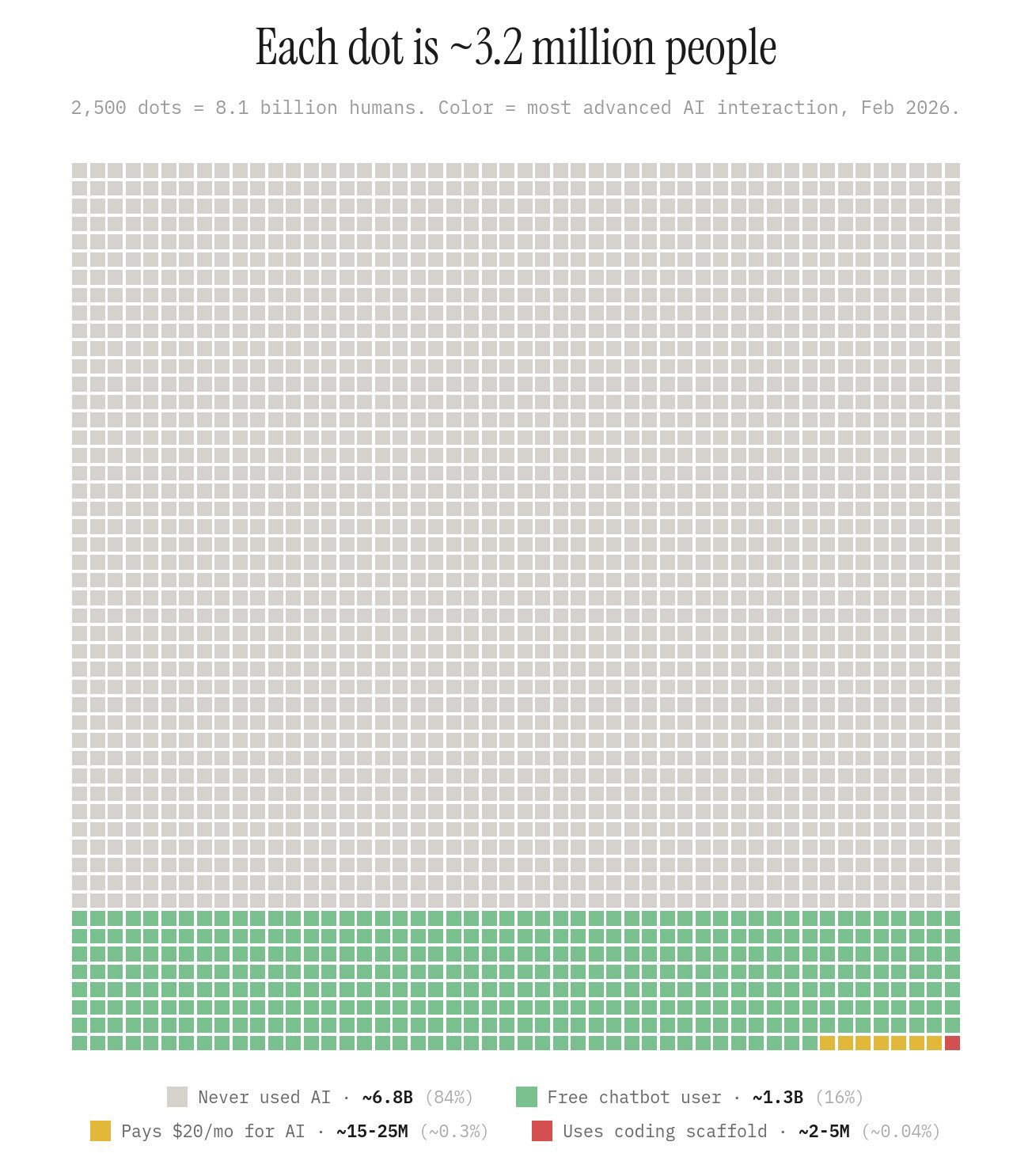
About 84% of the world has never used AI, while only 0.3% (!) have paid for an AI product. This is as good a visualization of “we’re so early” as I’ve seen.
3️⃣ Time Spent on AI Apps
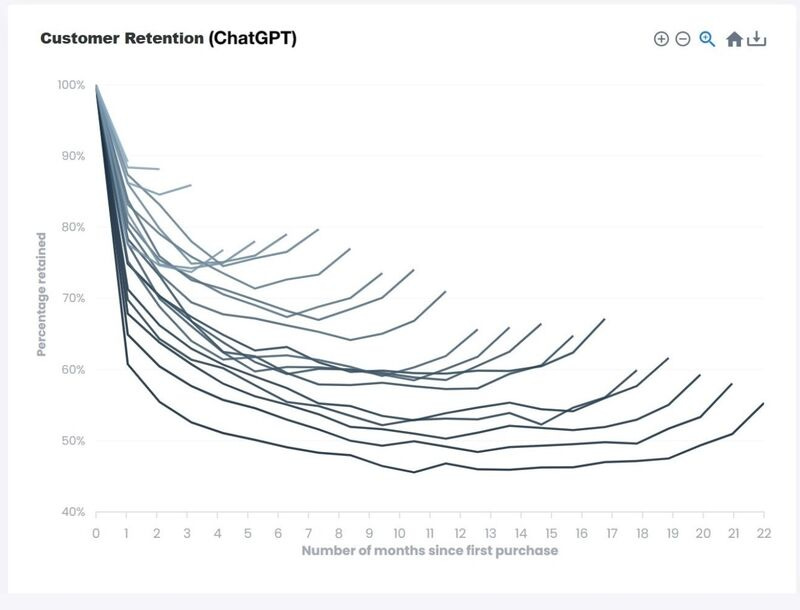
In the last version of 10 Charts, we looked at “smile curves” for ChatGPT:
From that piece:
This chart commits what I call “y-axis crime,” meaning that the y-axis misleadingly doesn’t start at zero. But in this case, the y-axis crime actually hurts ChatGPT! The curves are even better when you realize the worst cohorts asymptote (then “smile”) in the mid-40s.
These types of curves are typically reserved for marketplace or social products that have network effects, meaning they improve as more users join the platforms (e.g., Uber improving with more rider / driver density, or Instagram improving with more of your friends on the app). It’s impressive to have this retention for a single-player product that hasn’t launched social features.
Alongside improving retention, AI apps are seeing improving engagement. Here’s a visual that shows this trendline:
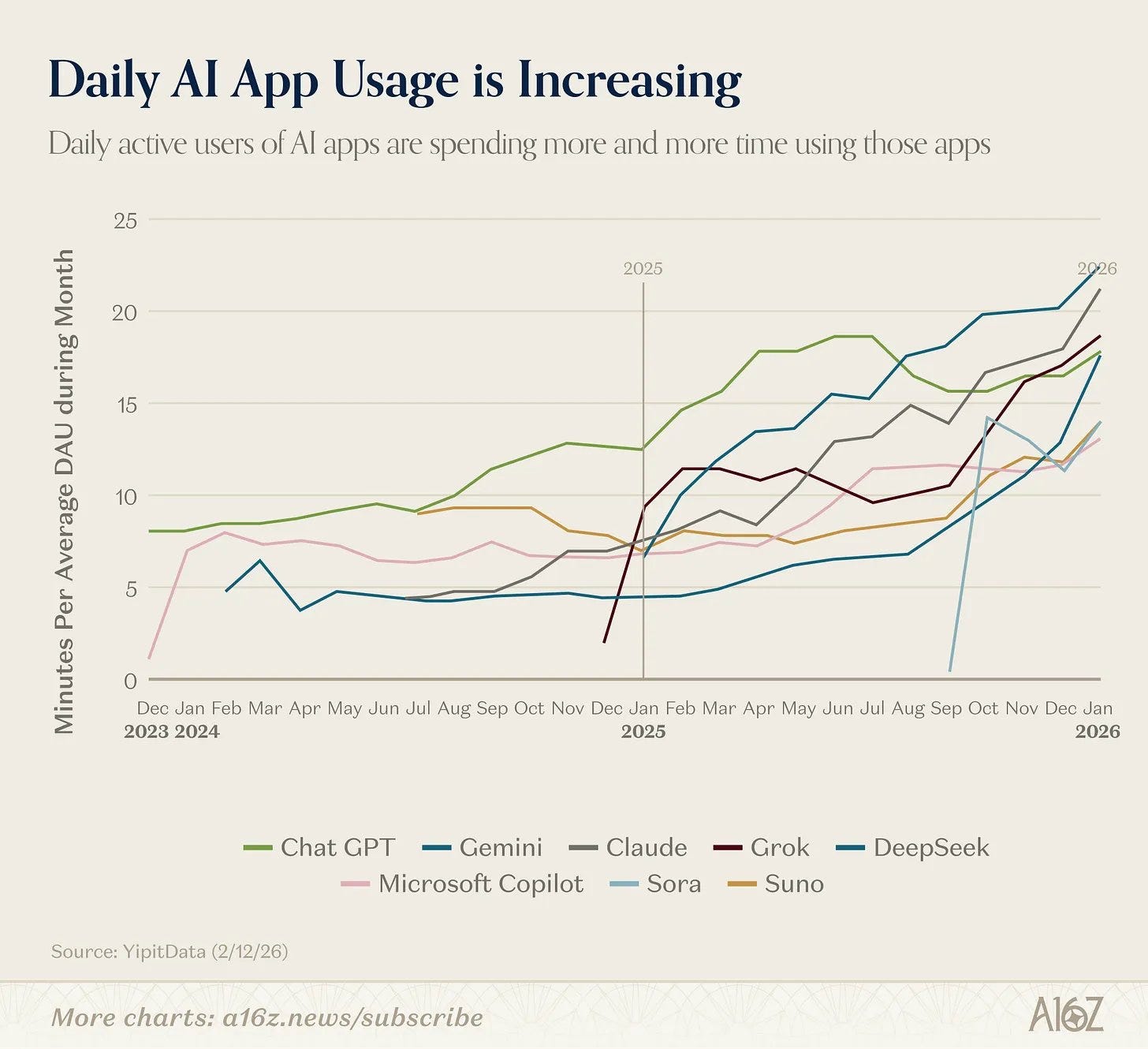
Across the board, this is very impressive growth in usage.
Back in 2017, Netflix’s Reed Hastings famously said that Netflix’s biggest competitor is sleep. Netflix is in the business of soaking up more and more watch time (higher watch time = better subscriber retention + willingness-to-pay), so naturally sleep is in direct tension with the business model.
We’re now seeing flattening time spent on media, at ~12.75 hours per day:
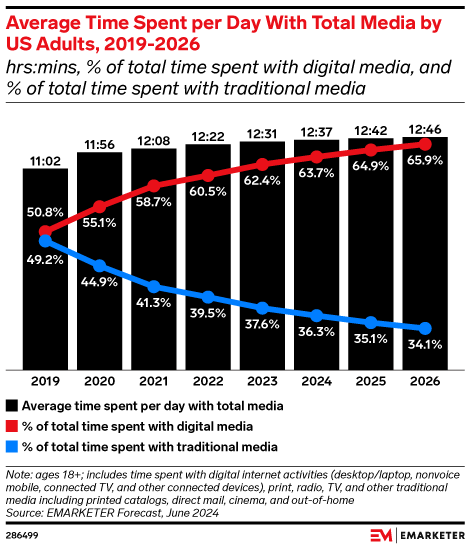
Increasing AI usage must come at the expense of time spent elsewhere. Maybe Claude’s biggest competition is sleep? I also imagine that Netflix, YouTube, TikTok, and the like are watching the above chart of AI usage warily. That half an hour on Gemini is half an hour not watching short-form videos. AI tools are clearly more than Google replacements; they’re social + content products too. Just want until generative media starts to really hit, and we’re going to see enormous pressure on engagement metrics for the big incumbents.
4️⃣ Healthcare Is Driving Employment
Healthcare is the largest category of employment in the US, comprising about 15% of jobs. And healthcare is the engine behind nearly all job growth. Check out this chart:
![r/dataisbeautiful - [OC] If you exclude healthcare employment, the U.S. has lost jobs since 2024](https://substackcdn.com/image/fetch/$s_!jHJ2!,f_auto,q_auto:good,fl_progressive:steep/https%3A%2F%2Fsubstack-post-media.s3.amazonaws.com%2Fpublic%2Fimages%2Fa2d29eef-4b09-4bfa-bd75-137cb3485b65_640x564.png "r/dataisbeautiful - [OC] If you exclude healthcare employment, the U.S. has lost jobs since 2024")
Overall, healthcare will drive about 40% of new jobs over the next 10 years. Meanwhile, the fastest-growing single job in America this decade is “home health aide,” powered by a rapidly aging population (10,000 Americans turn 65 every day).
Healthcare is benefiting from a few major tailwinds:
LLMs are perfectly suited to healthcare admin, a trillion-dollar market, because healthcare runs on language.
Consumers are more and more willing to measure, personalize, and spend on their health.
Telehealth is broadening access to care, powered by new regulations that expand coverage post-pandemic.
Our population is getting older and sicker. “Silver tsunami,” and all that.
Many healthcare jobs are also “AI-proof,” which I think means we’ll see more young people moving into healthcare fields.
5️⃣ Secondaries Reorient VC + Employee Returns
This has been an under-talked-about shift in venture. Secondaries are now on par with IPOs and M&A for exits:
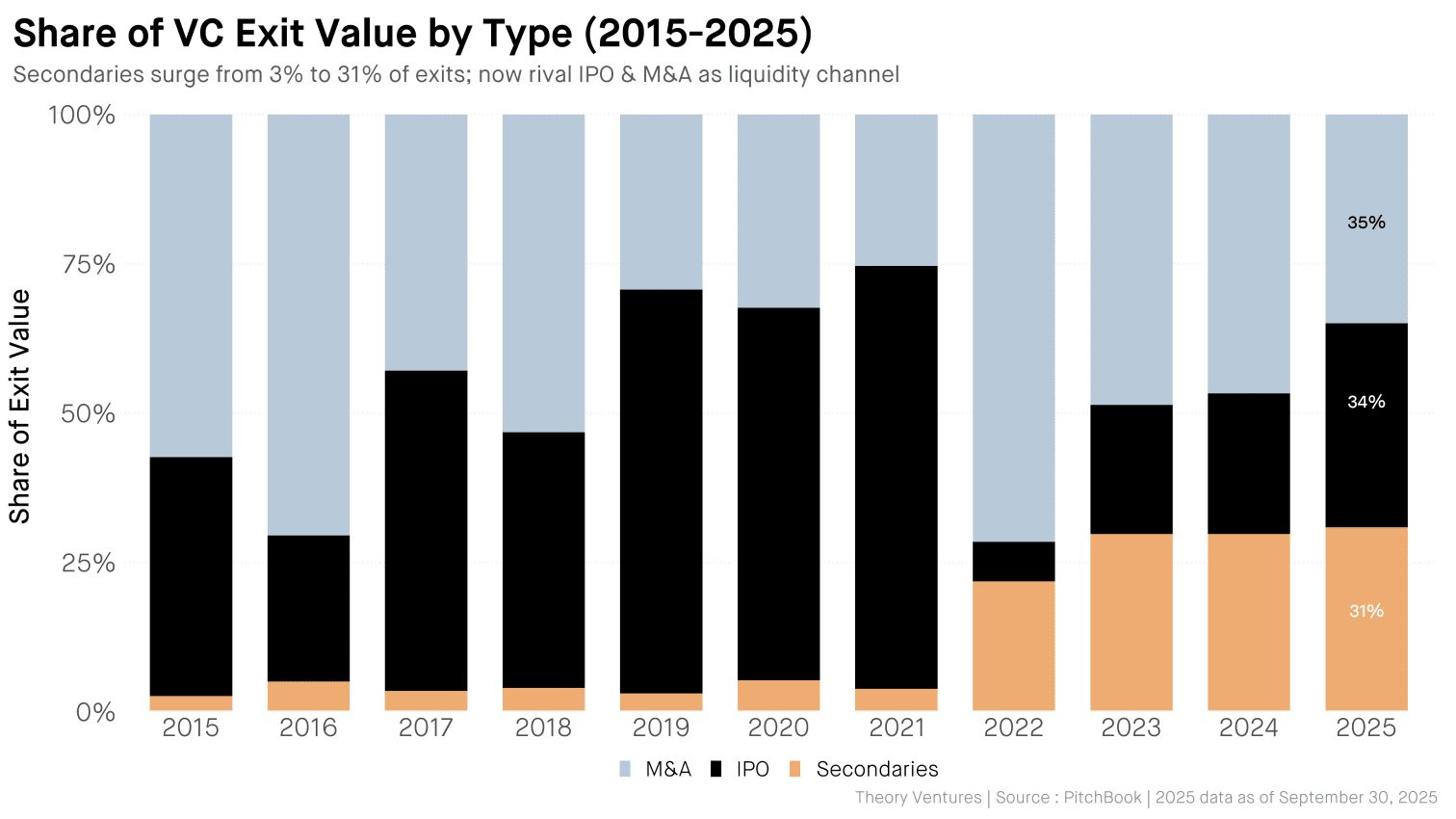
This changes the game both for early funds like Daybreak and for startup employees. Timelines to liquidity compress. I wouldn’t be surprised if we return multiples of our fund by selling shares in growth-stage funding rounds. This isn’t anything new—Roger Ehrenberg from IA Ventures has talked publicly about selling ~2.5M of ~6.6M shares in The Trade Desk in a secondary sale, to return capitals to LPs—but it’s becoming more common.
And on the employee side, employees don’t have to wait 10+ years to get some liquidity. Clay and ElevenLabs have each done two tender offers in the the last 12 months alone, while Anthropic is currently doing a $6B (!) tender offer. The latter will no doubt create a shock in the SF housing markets.
6️⃣ Gen Z: The Last Generation in the Alphabet
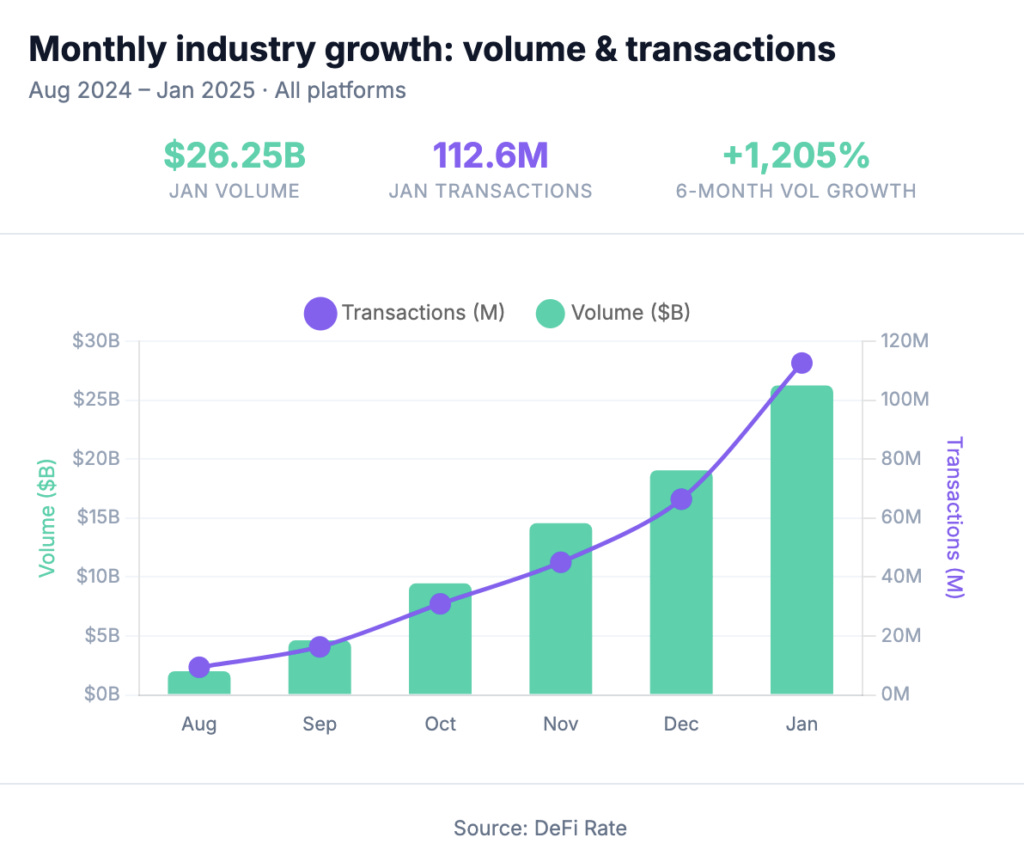
Kalshi reported over $1B of betting volume on Super Bowl Sunday, a 2,700% (!) year-over-year increase. Here’s a chart on prediction markets volume leading up to the Super Bowl, showing 1,205% growth in volume over six months:
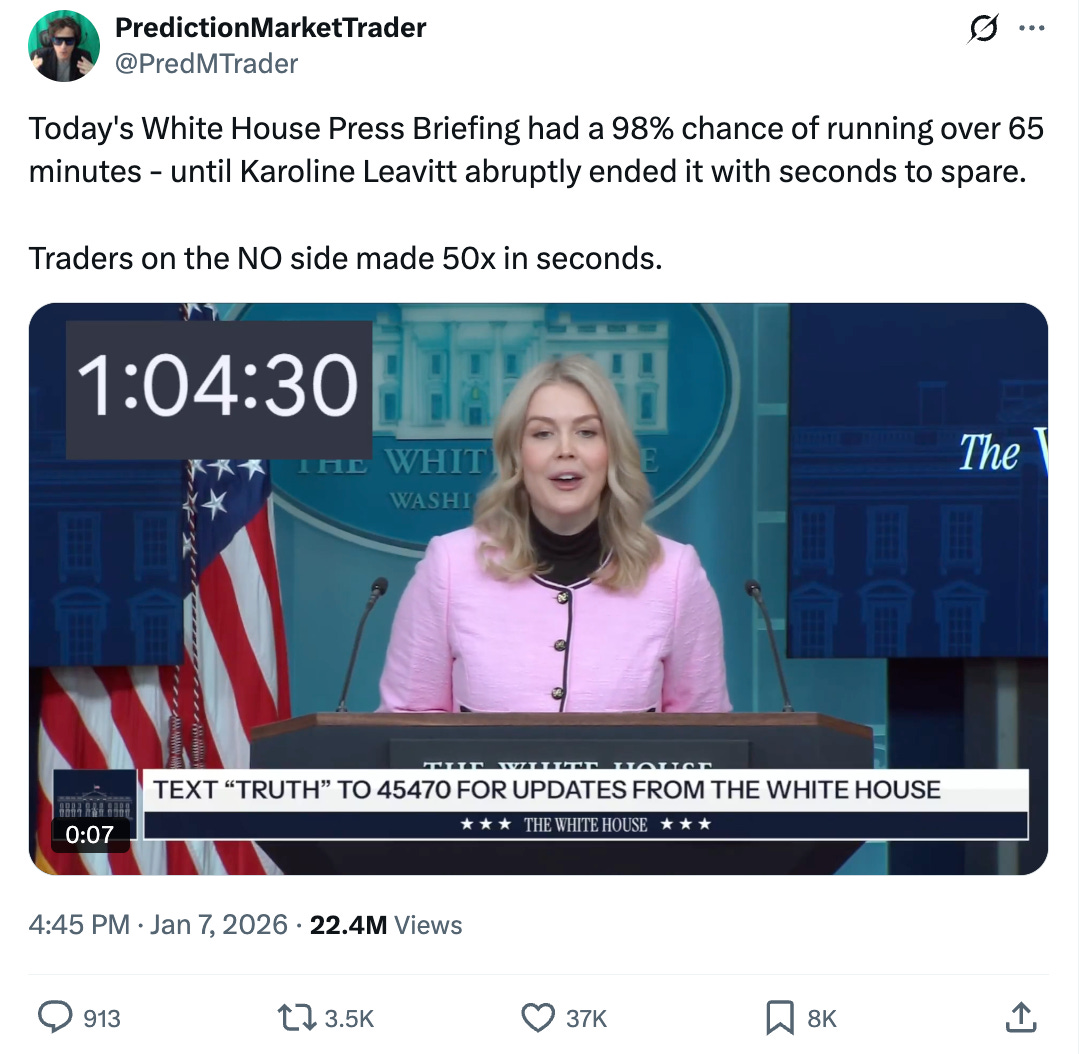
These markets are new and rife with controversy. White House Press Secretary Karoline Leavitt abruptly ended a briefing early in January, spiking questions of insider trading:
During the Super Bowl, my partner bet a little money on Cardi B performing with Bad Bunny after she was shown on stage. Then he lost that money, with Kalshi saying that a performer had to sing in order to count as “performing.” This led to at least one person filing a complaint with the CFTC. This is the Wild West!
But despite controversy, I think prediction markets are here to stay. Last fall we wrote about the forces behind the rise in prediction markets in Speculation Nation. That piece centered on enabling technologies colliding with Gen Z behaviors, including the rise of FAFOnomics (FAFO = Fuck Around and Find Out).
My friend Jackson Denka wrote an interesting essay this week called Financial Nihilism or: How I Learned to Stop Worrying and Love the Market. He calls Gen Z “The Last Generation in the Alphabet,” which stuck with me. Some stats he rattles off:
2025 US college grads have a 9.3% unemployment rate, higher than during the GFC
The top 1% of households own nearly 30% of the country’s total wealth
The average first time home buyer is now 40-years-old
Is it any wonder we’re becoming a speculation economy? If upward economic mobility is Sisyphean, then why not bet it all on for a chance at riches? Note: this is not a good thing, but I think it’s one of the defining undercurrents for the next generation.
7️⃣ Peptides and Reta
Among the AI hoopla, it’s easy to overlook other seismic shifts. One area where I’ve been spending a lot of time: peptides, which are starting to get mainstream attention.
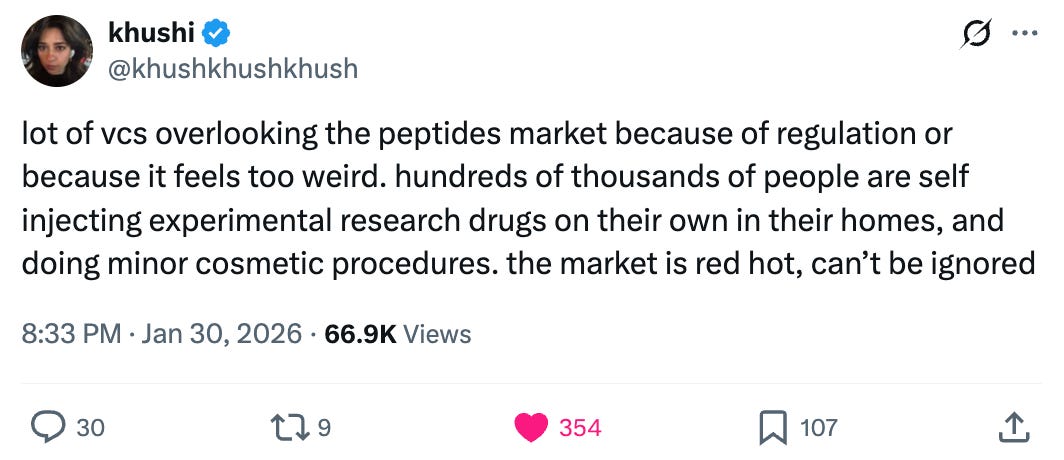
Peptides are chains of amino acids that signal molecules in your body. The most famous peptides are Ozempic and Wegovy, the brand names for the peptide semaglutide. The peptide market is booming, as consumers show real interest and willingness to pay. My friend Khushi put it well in this tweet:
Our first investment in 2026 was in a peptides company, System Labs, which launched last week. There’s a big opportunity to demystify peptides for the everyday consumer, to be the trusted source of American, credible, safe peptides.
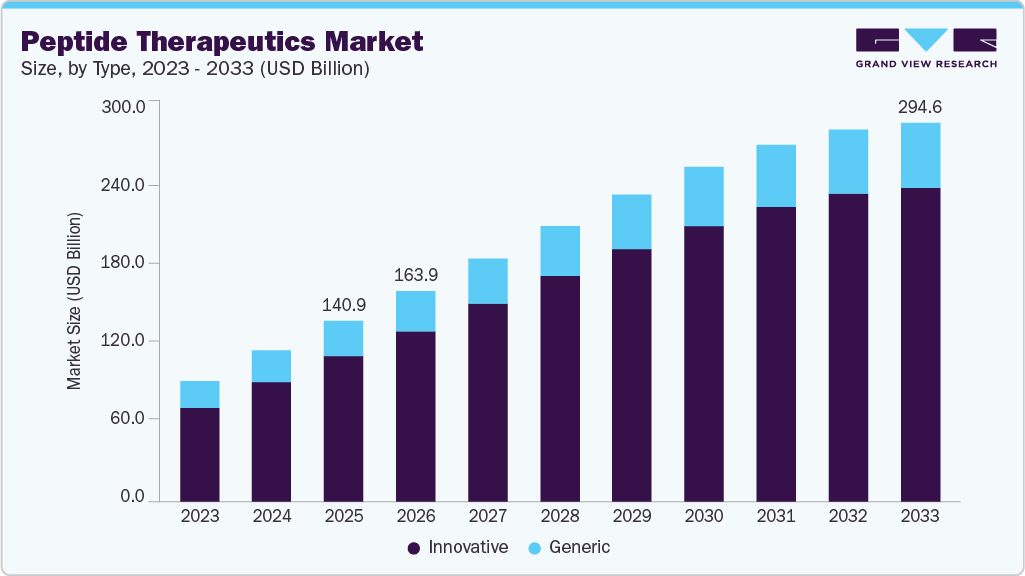
You can see here expected growth in the market:
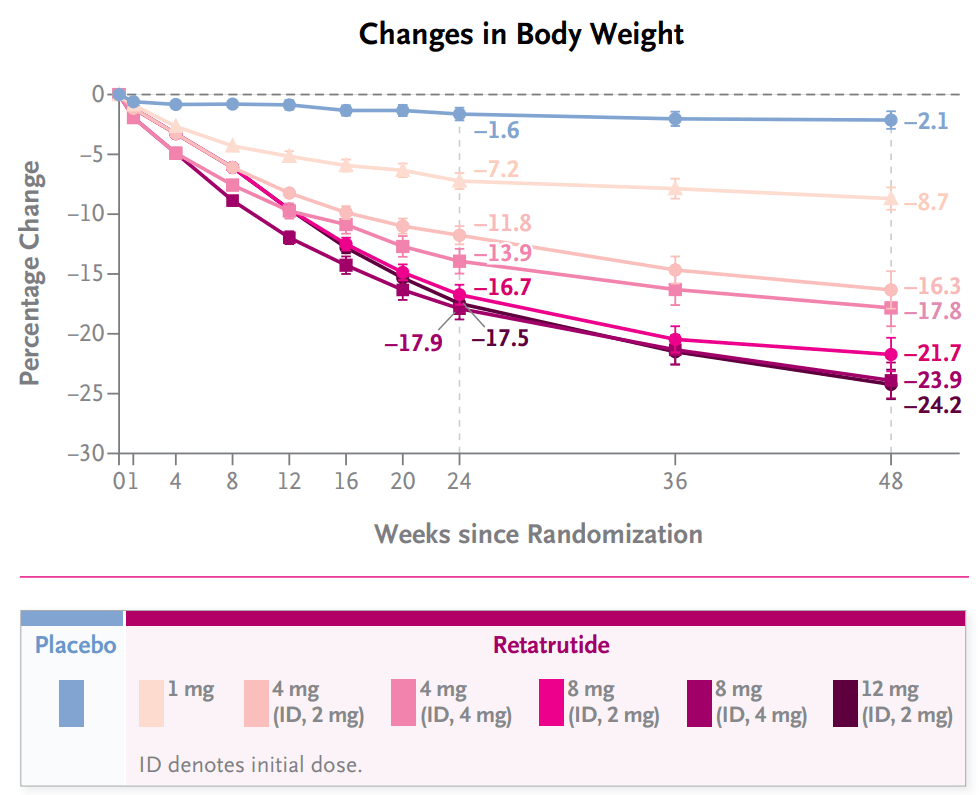
The most underrated drug right now is Retatrutide, or Reta. Reta, being developed by Eli Lilly, is a triple-agonist drug compared to Ozempic’s single agonist; this is a fancy way of saying that Reta targets three receptors: GLP-1, GIP, and Glucagon. This means the drug enhances satiety, improves insulin sensitivity, and increases metabolic rate (fat burning). Ozempic is just a GLP-1, so focuses primarily on appetite reduction.
Reta is a potential trillion-dollar drug. Here’s one chart of weight loss on Reta:
Expect to be hearing a lot more about Reta soon.
8️⃣ The State of Gaming
Matthew Ball put out a long report on the state of gaming last week. Here are a few highlights:
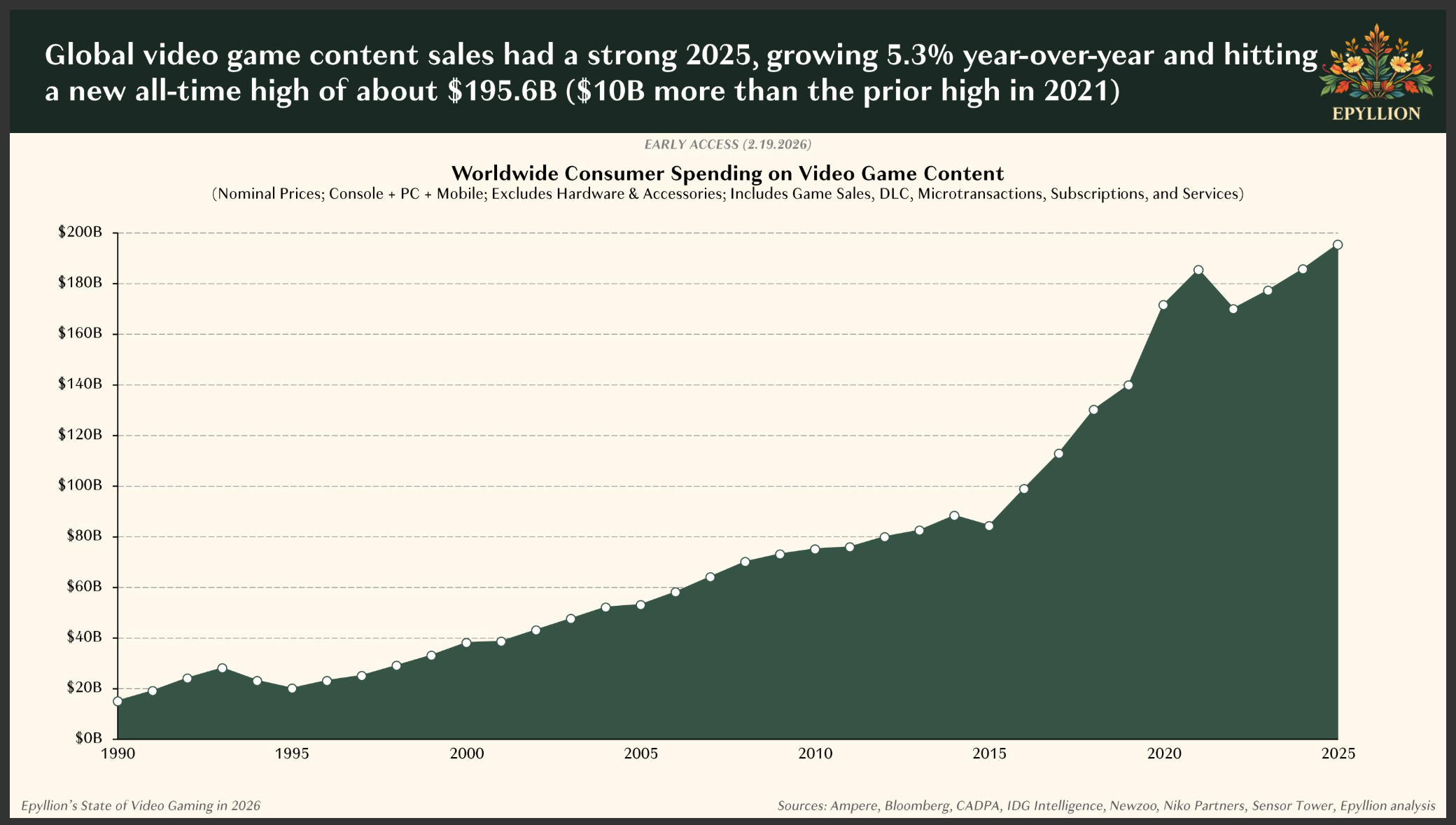
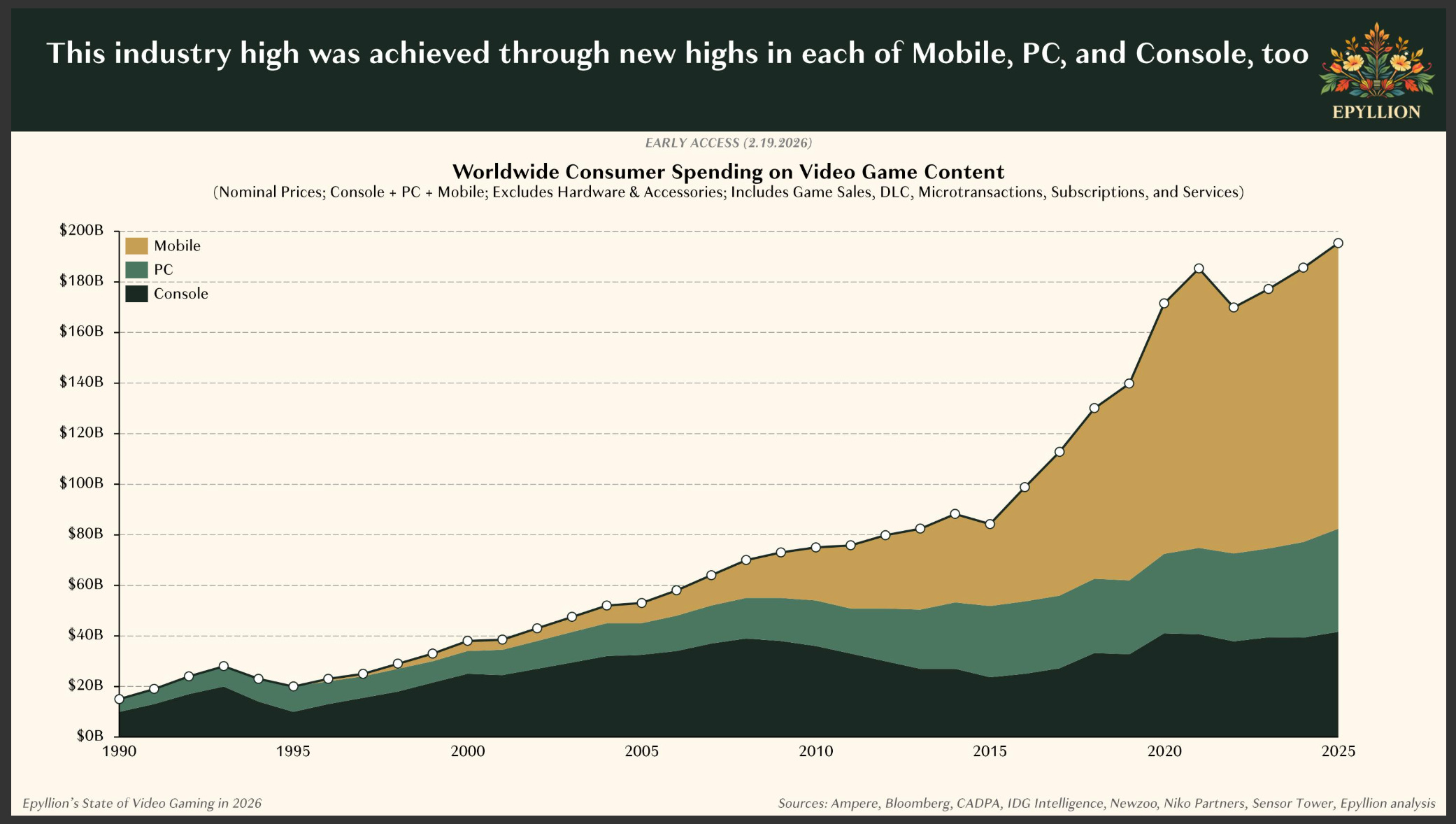
Gaming continues to be the largest category of media with $200B in annual spend, larger than film + TV + music combined. After a short dip post-COVID, growth has resumed:
Mobile is powering most of gaming’s growth:
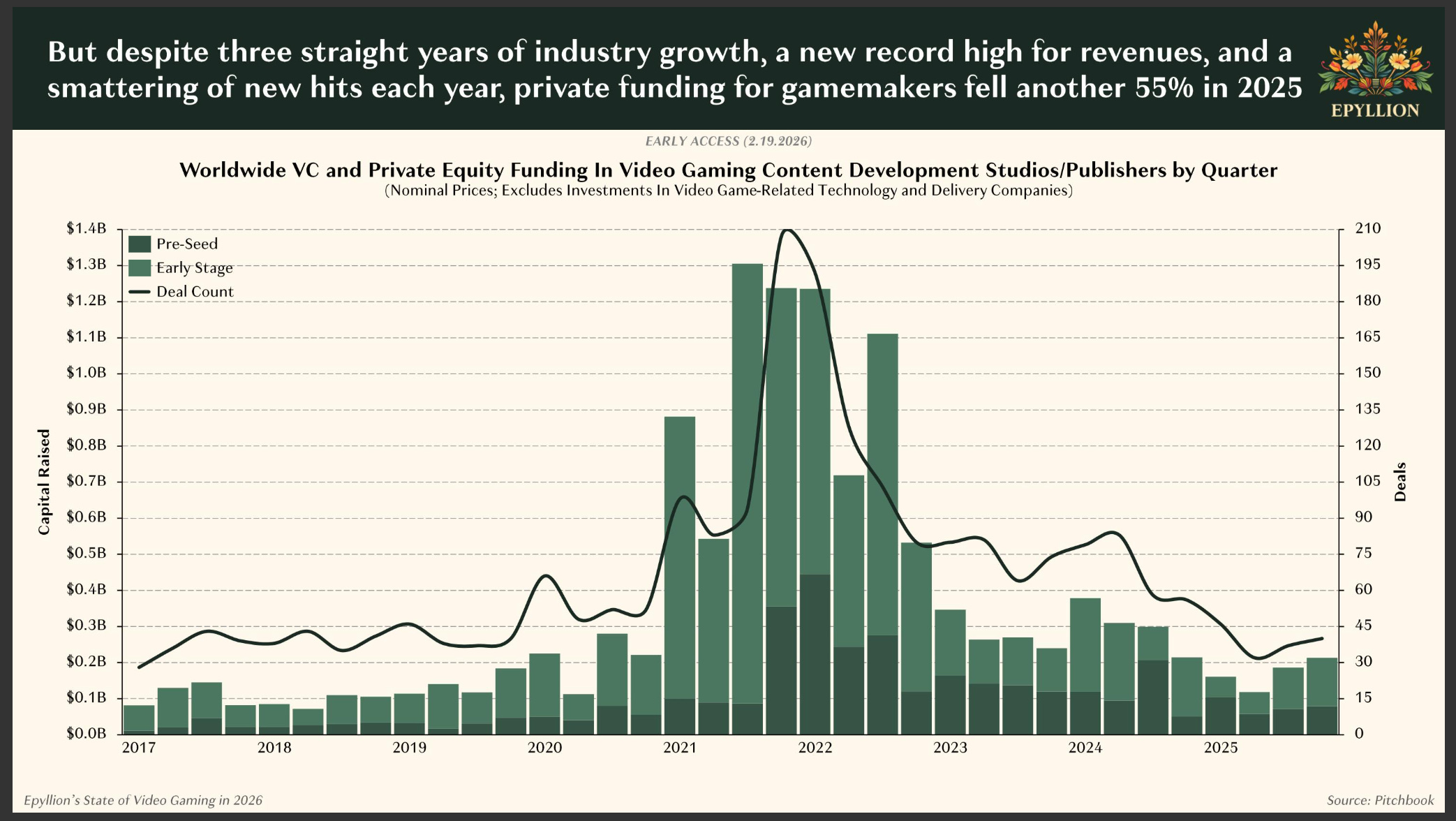
Despite market growth, venture funding is down a lot since post-COVID highs:
AI will reinvent gaming, though that hasn’t really happened yet (we’re still primarily in the text phase of AI). Soon it will be the norm for games to be generated, not rendered, which will open up new possibilities for narratives + world-building.
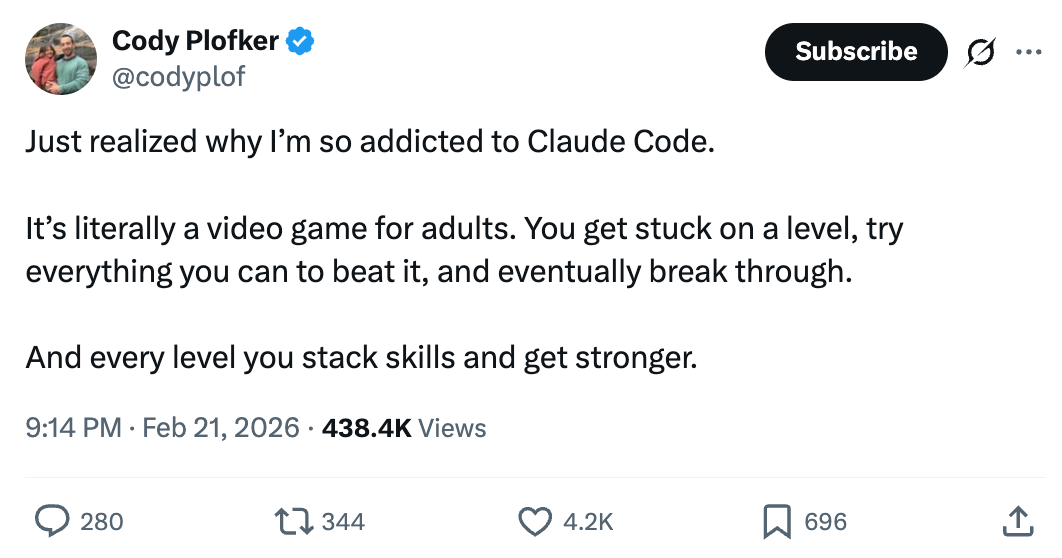
Going back to our point earlier about AI apps competing with sleep and Netflix: we may also see AI apps infringe on time spent gaming. This tweet resonated with me:
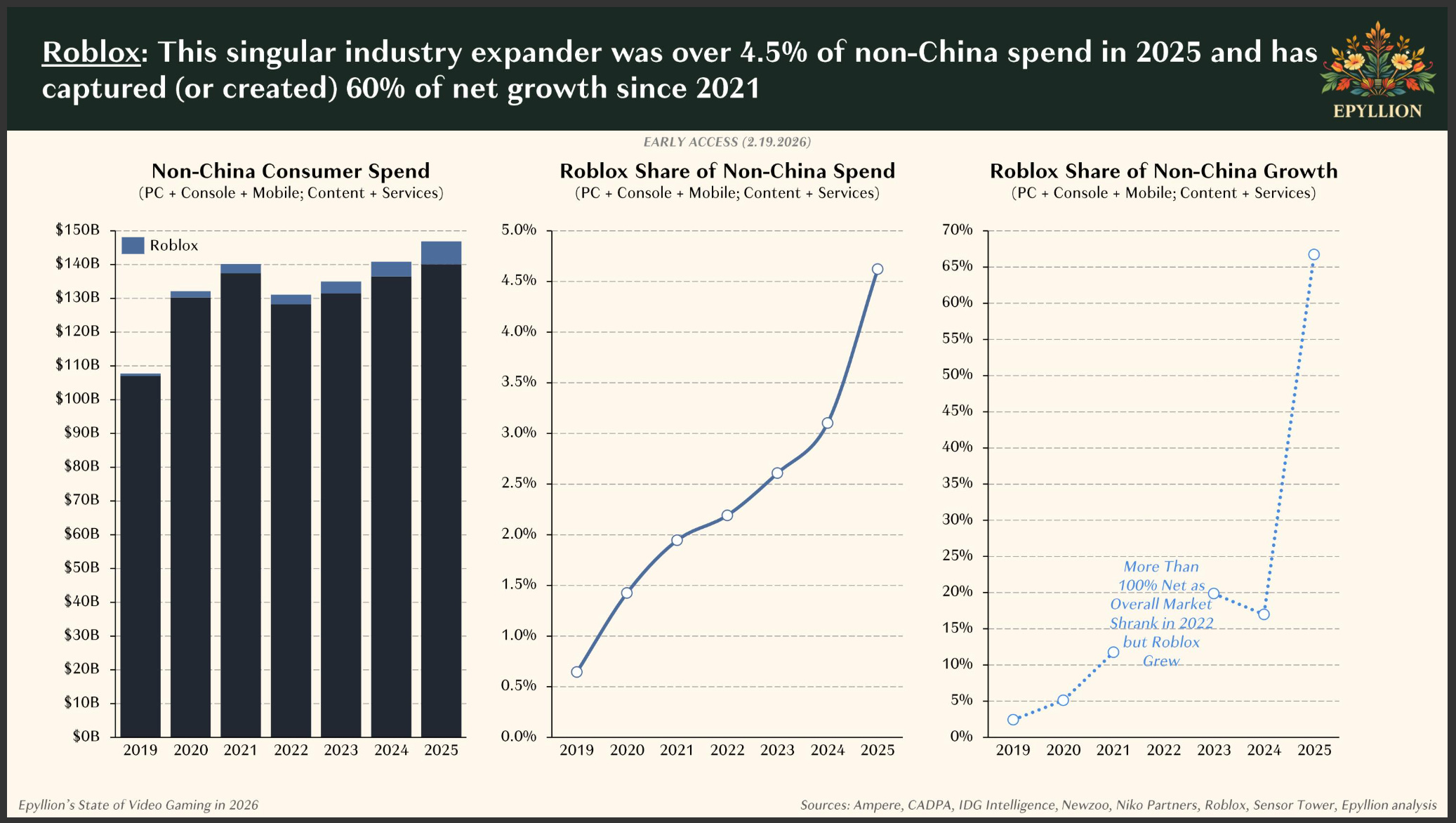
The most impressive company in gaming continues to be Roblox, which is driving a huge portion of gaming’s growth:
Roblox now has 150M daily active users, and you can see here that the portion of users 13+ in age has been especially fast-growing:
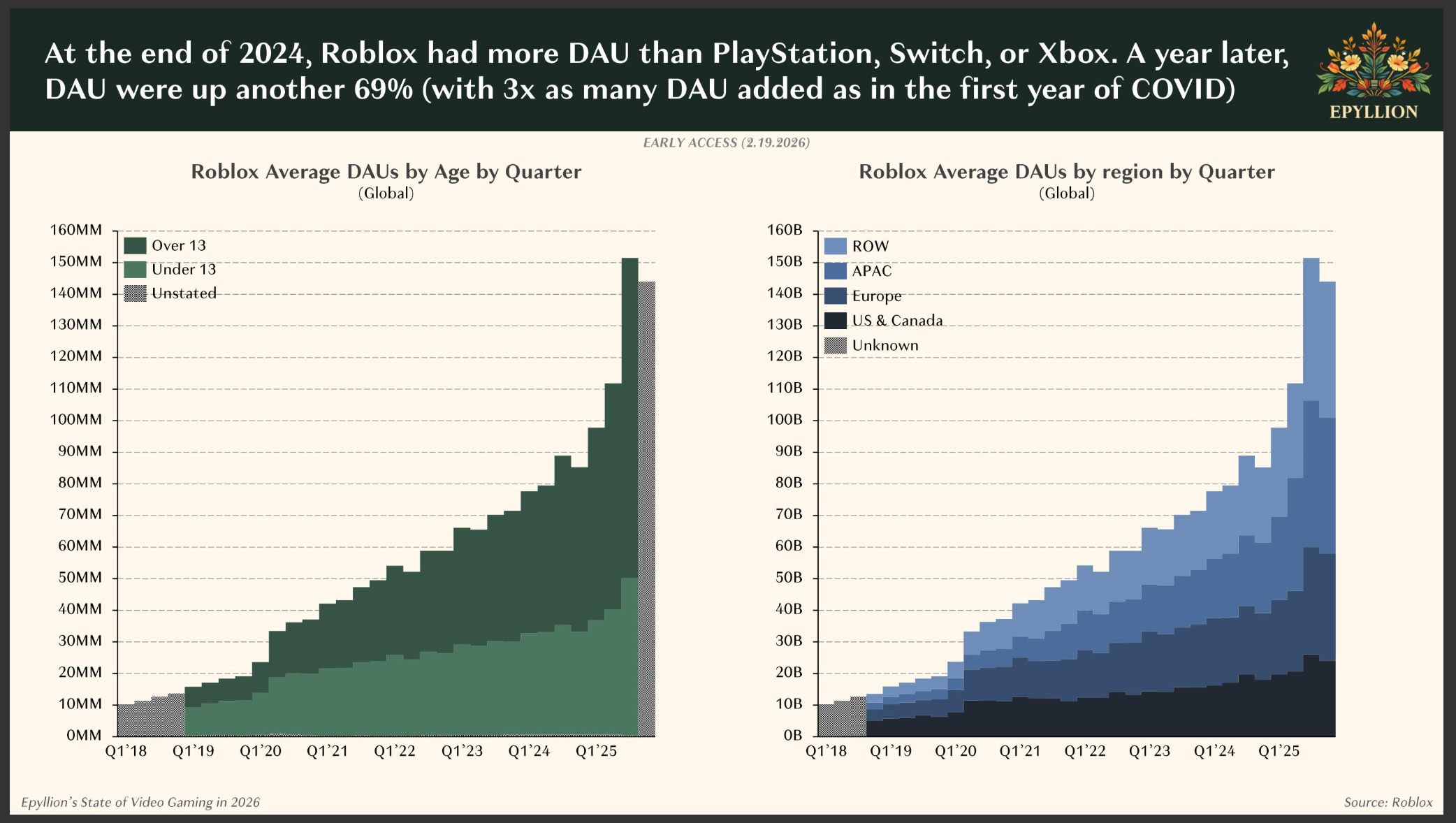

Average engagement for Roblox now tops Steam + PlayStation + Fortnite combined.
9️⃣ Calls for More Agent Calls
Here’s an interesting chart showing Anthropic agent calls across various industries:
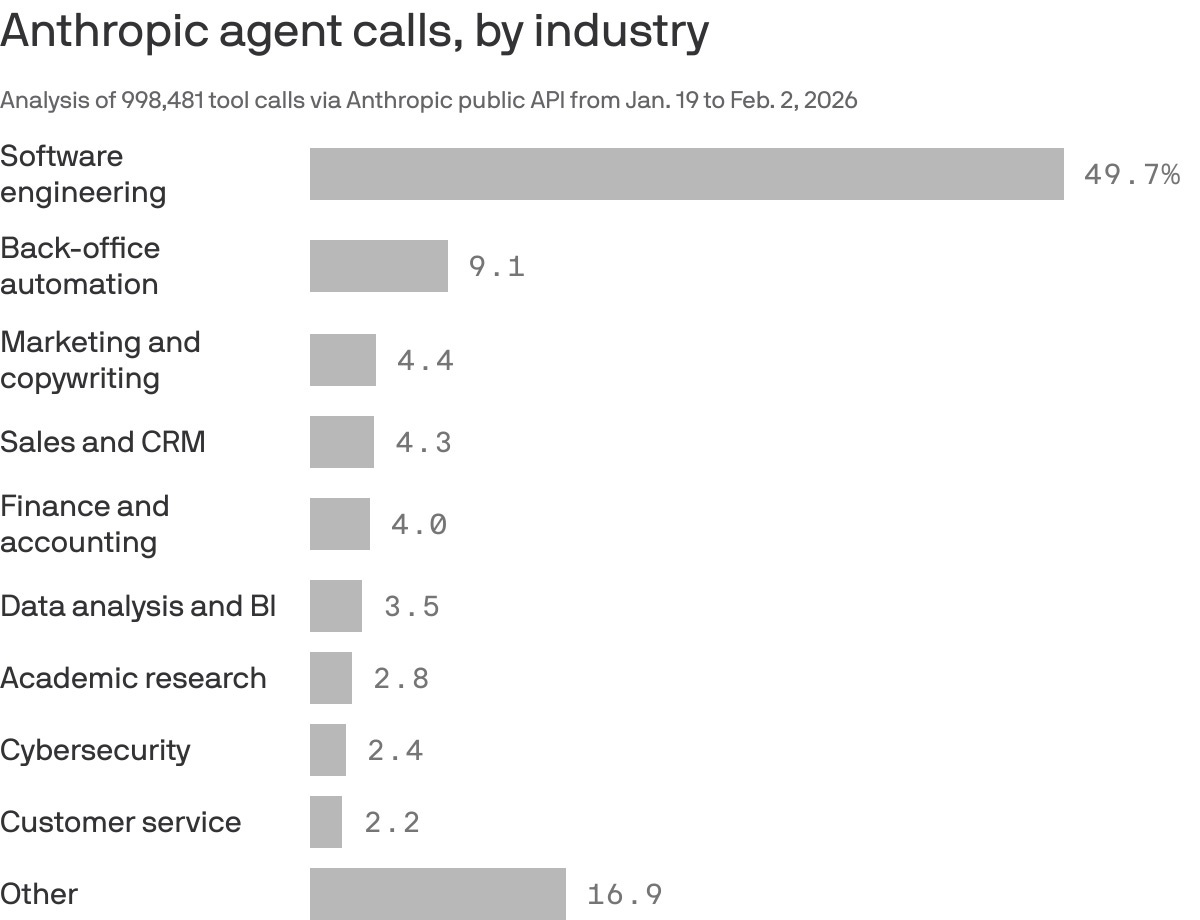
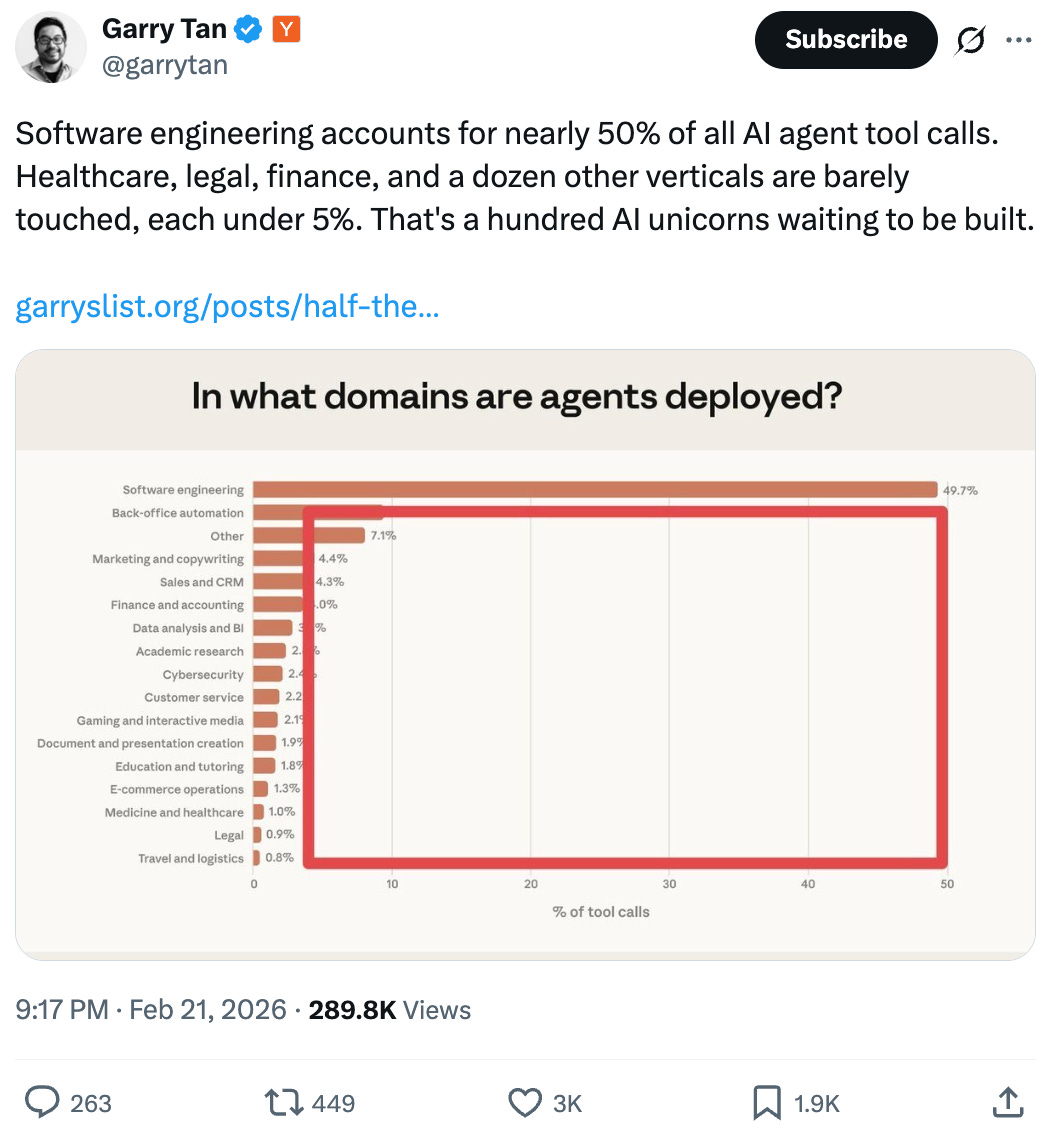
Clearly there’s a huge opportunity for agents outside of software engineering. Or as Garry Tan put it:
As for what happens to jobs in these categories: I think labor shocks will be slower to materialize. We’ve written a lot here about Jevon’s Paradox. As one more example, here’s a nice visual from Coatue on ATMs:
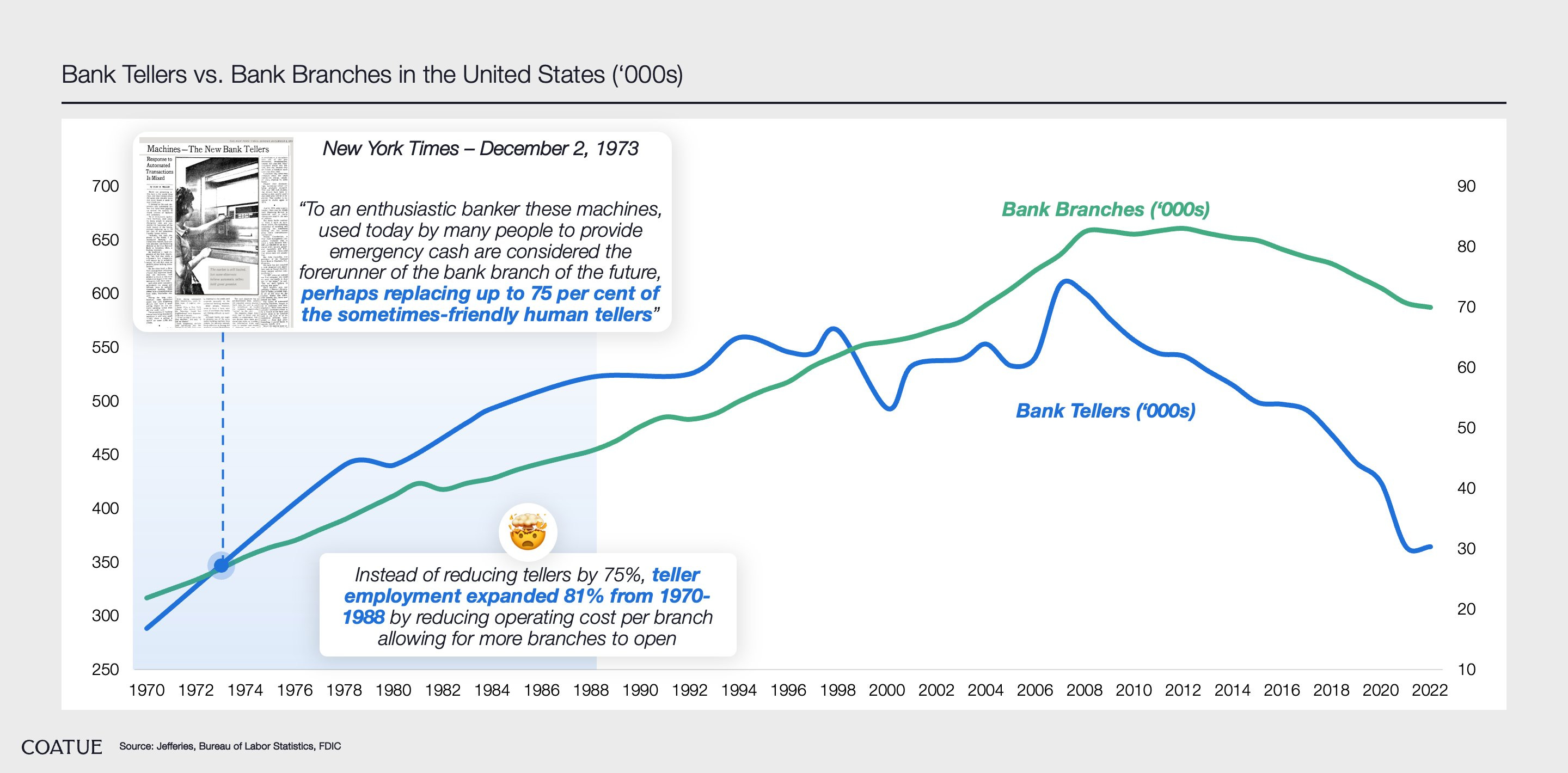
People thought ATMs would decimate bank teller employment. Instead the number of bank tellers increased 81% from 1970 to 1988, and enjoyed four decades of steady growth.
🔟 The Citrini Selloff
Another week, another viral blog post. This week it was a Substack essay from Citrini, which prompted a market selloff:
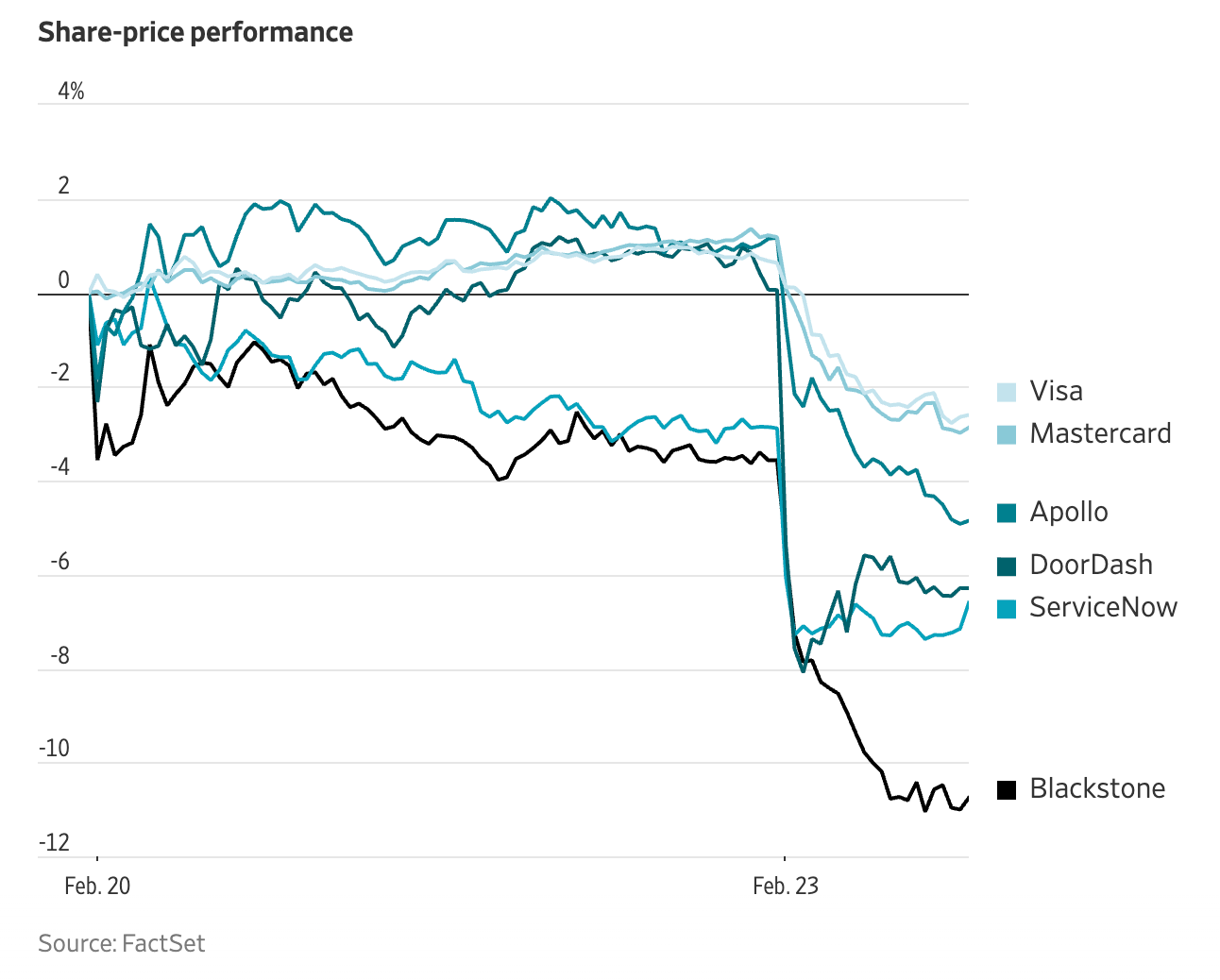
It’s wild to me that a casual essay musing about the future, which no basis in fact or data, can prompt such widespread market panic. To me, it’s a sign that (1) the markets are overheating and looking for reasons to correct, and (2) that we’re officially a meme economy.
I found the piece fairly native. Fintech and marketplace companies are a lot tougher to disrupt than the Citrini piece suggests. DoorDash’s Tony Xu had a good response.
The real takeaway from the Citrini selloff ordeal: no one knows what the hell is going to happen.
Thanks for reading! Subscribe here to receive Digital Native in your inbox each week: