

Weekly writing about how technology and people intersect. By day, I’m building Daybreak to partner with early-stage founders. By night, I’m writing Digital Native about market trends and startup opportunities.
If you haven’t subscribed, join 70,000+ weekly readers by subscribing here:
Nothing Goes Viral by Accident
We’re a quarter into 2026, and we have an early frontrunner for “Word of the Year”—looksmaxxing. Looksmaxxing is quickly becoming synonymous with one person: Clavicular. Clavicular (real name Braden Peters) was the subject of a long New York Times piece last month, and he’s everywhere online.
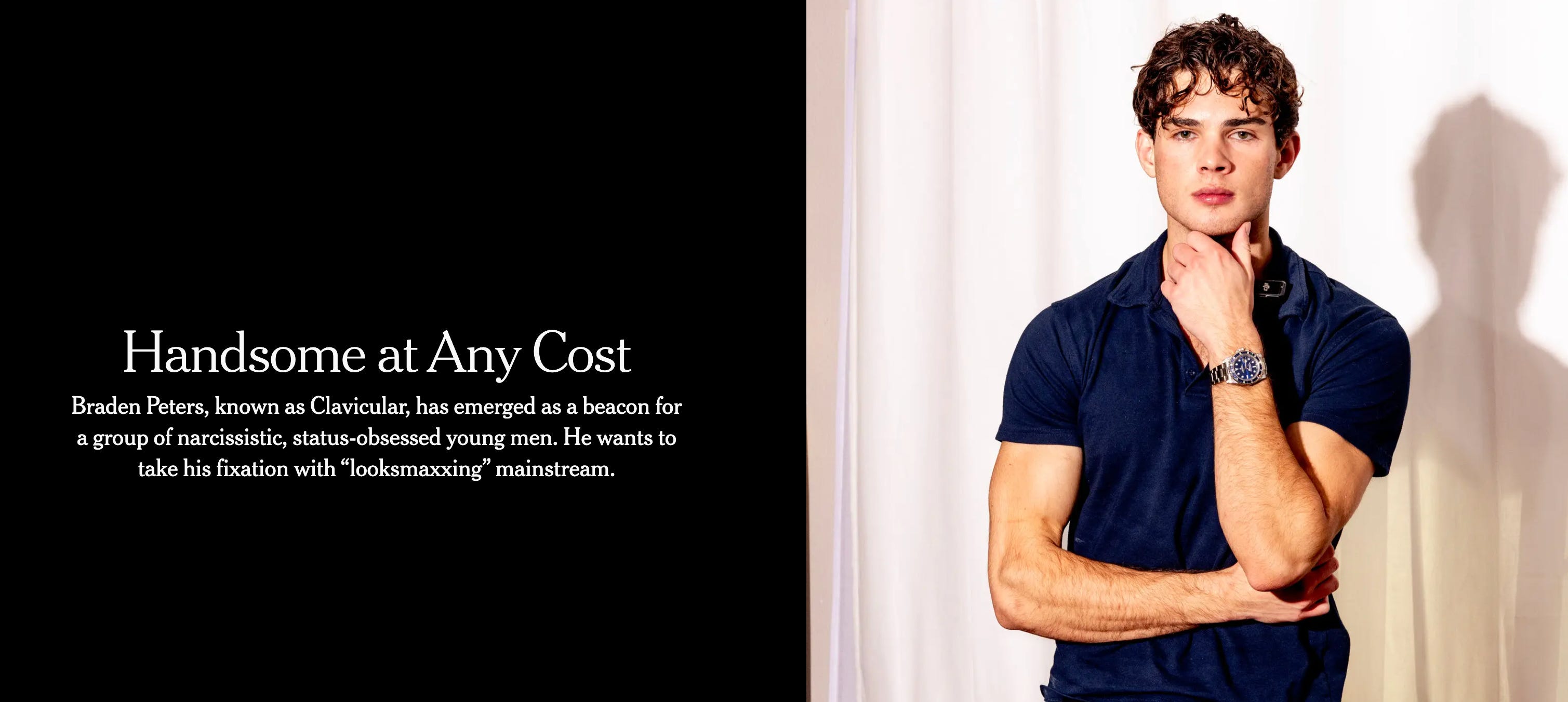
If you think Clavicular’s ubiquity is organic, you’re wrong; it’s manufactured, the result of a clear and intentional marketing strategy. As my friend Blake pointed out, Clavicular is a case study in the business of clipping. You can see here that Clavicular got 1,000,706,585 views (!) in the last month from 34,667 videos and 645 clippers:
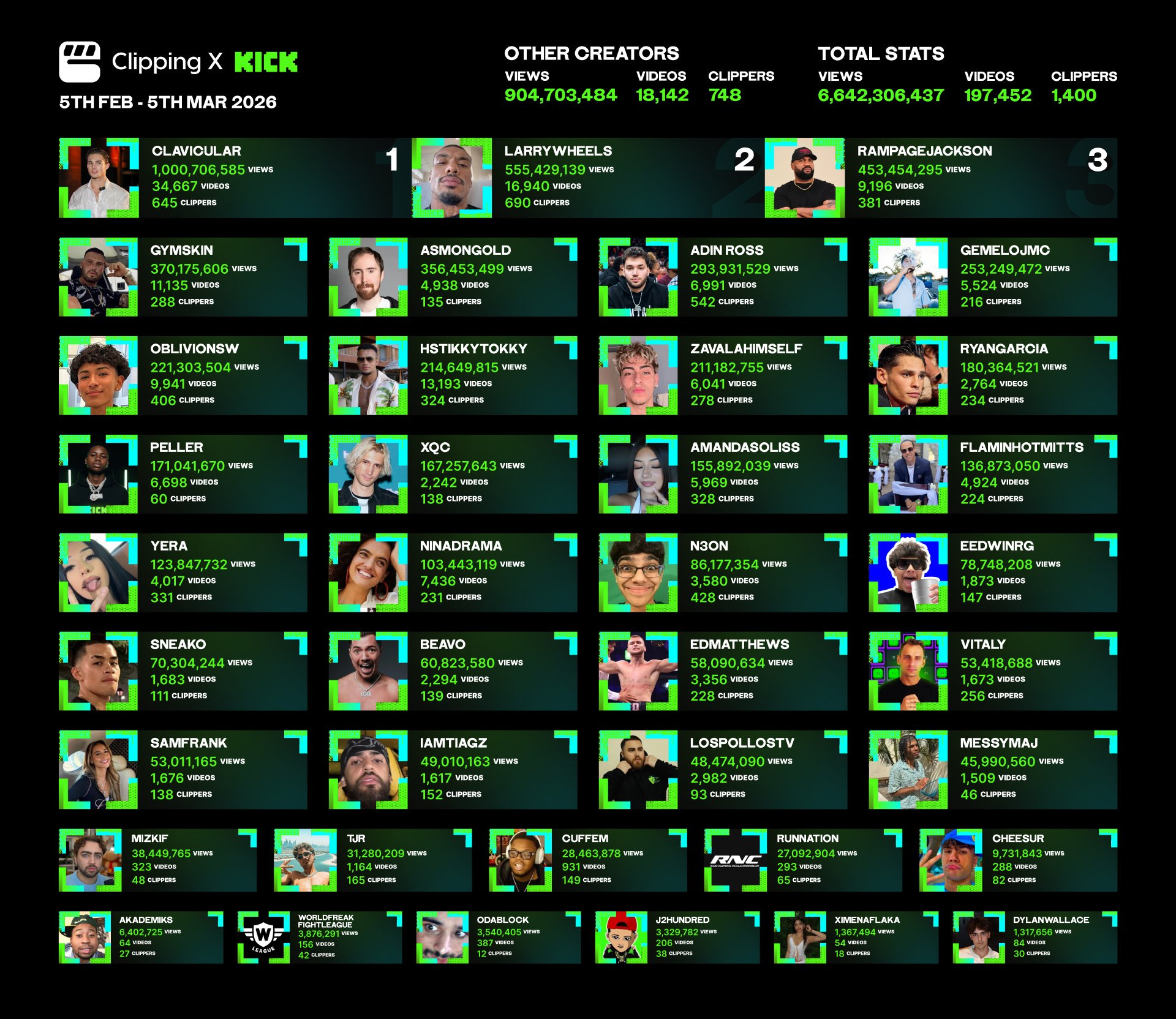
“Clipping” is the term for taking someone else’s long-form content (a podcast episode, livestream, YouTube video, etc.) and cutting it into shorter, shareable segments that get broadcasted across platforms. Clippers typically add captions, zooms, and edits to optimize for algorithmic reach. Their incentives are aligned with maximizing reach: clippers are typically getting paid by the creator based on views. At their simplest, clippers are an outsourced distribution army.
Clipping has been around for a while. Joe Rogan used clipping to propel himself from a relatively unknown former Fear Factor host into the world’s most popular podcaster. Rogan would pay clippers to create accounts and post short-form clips, funneling new listeners to long-form episodes. The far-right influencer Andrew Tate also used clipping to power his rise back in 2022. Arguably the most prolific clipper is MrBeast, who reportedly employs more than a thousand clippers, paying $50 for every 100,000 views that videos receive. Last fall MrBeast launched his own clipping marketplace, Vyro, which pays a more generous $3 per 1,000 views.
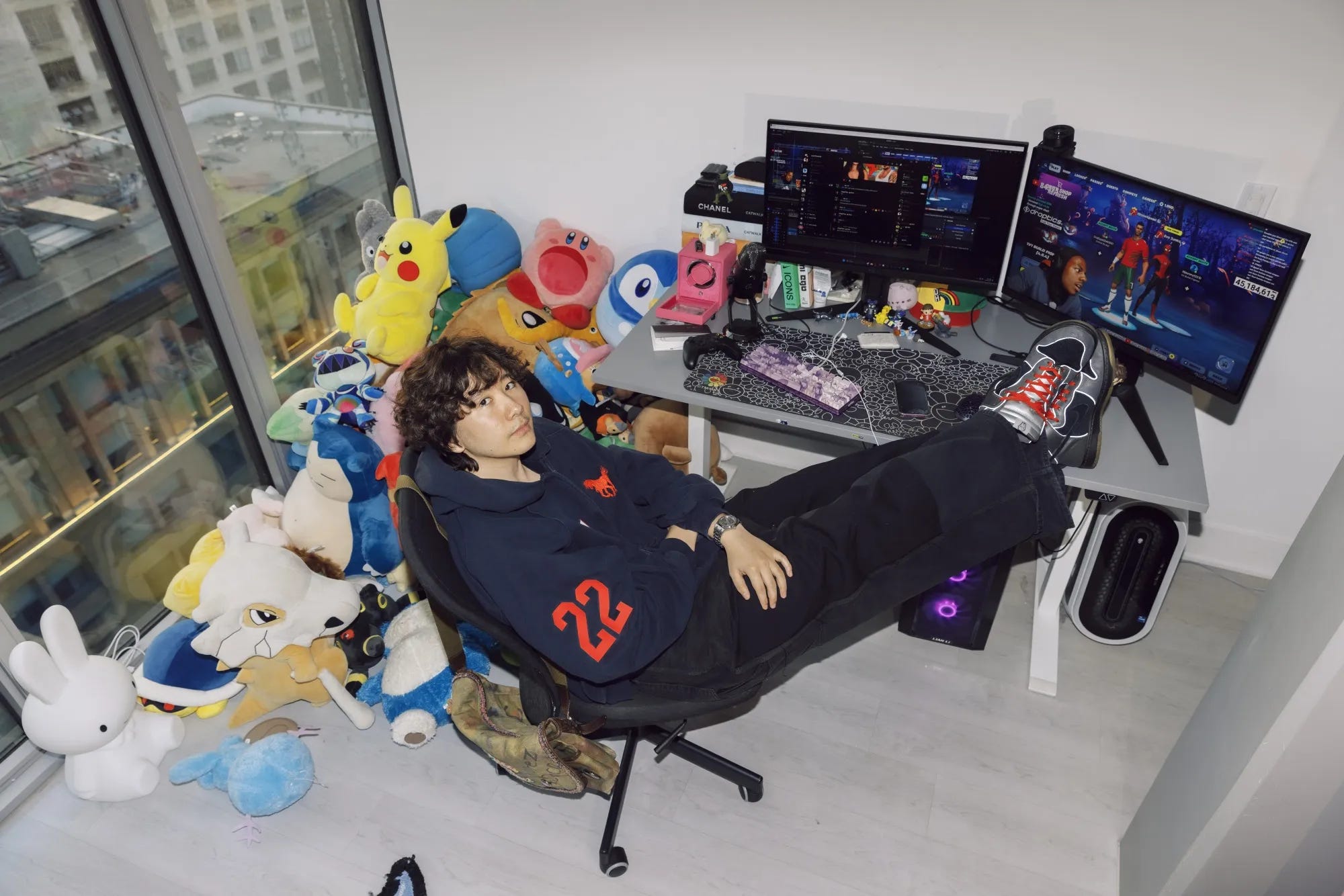
Anyway—the point is: clipping is the engine behind Clavicular’s rise, and behind the rise of many people driving culture. The practice flies under the radar, but it’s becoming table-stakes in modern marketing. These days it’s tough to suss out what’s organic virality and word-of-mouth, and what’s contrived.
Clipping is a good encapsulation of the broader moment in growth + distribution: noise, segmentation, and personalization. Let’s start with the latter two.
Segmentation & Personalization
Earlier this week we co-hosted an event with our friends at Founder Collective, centered around how to grow in the age of AI. Founders in the room expressed the same challenges:
Google is deteriorating as a channel because AI Overviews dramatically reduce clickthrough rates.
Influencer results remain mixed. The ROI on influencer doesn’t usually make sense, unless you own usage rights and use influencer as top-of-funnel for UGC that you can rigorously test and put ad dollars behind.
AEO and GEO (Answer Engine Optimization + Generative Engine Optimization) are obviously top-of-mind for everyone; Heads of Growth are champing at the bit to get access to ChatGPT ads.
The succinct takeaway was the word “segmentation” (shoutout to Sib for the phrasing). In other words, marketing is moving toward ever-thinner slices of customer segmentation. This is all powered by data, of course, with AI acting as the “why now.”
We’ve had segmentation and personalization for a long time. Facebook and Google made it possible for advertisers to target you based on your sex, your age, your location, your interests. We all get targeted ads. Targeted ads are the reason I Googled “best running shoes for flat feet” in 2019, and will now see Nike Pegasus ads until the day I die. I searched Arhaus once (once!) last week and have been bombarded by home decor ads all week. AI greases the wheel, improving quality and quantity of ad targeting.
Critically, the unit economics for personalization are collapsing: it used to take an agency, a creative team, and $100,000 to produce a dozen ad variants for different audiences; now one person can do all that in a few minutes for a small sum. The result will be higher ROI on ad spend for the company and better personalization on ads for the consumer.
Take Honeydew, one of our fastest-growing Daybreak companies and one of the teams present at the event this week. Honeydew unveiled their fresh brand and website last week:
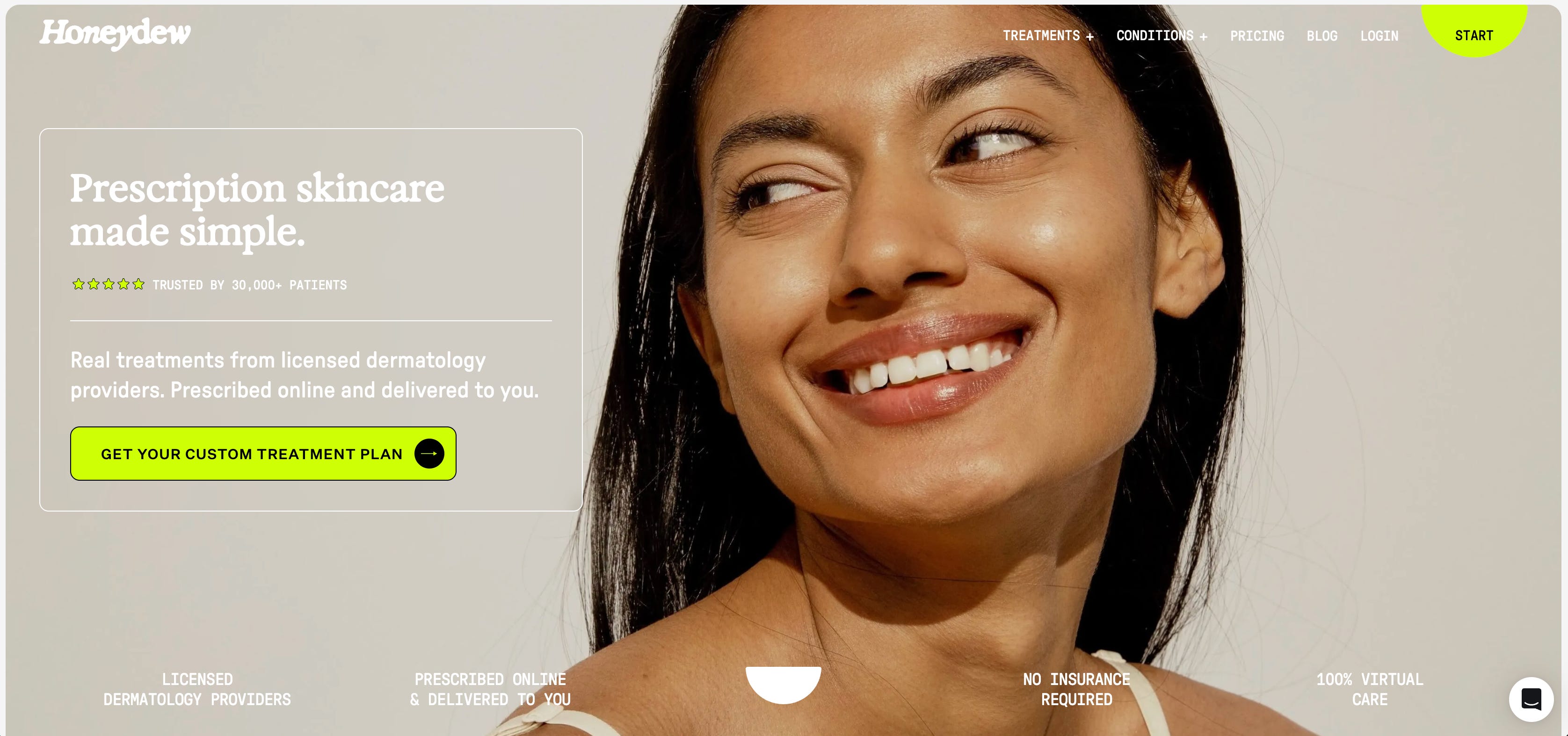
A few years back, a company like Honeydew might segment “women 25-34 interested in skincare.” Now, we can dynamically segment by skin concern (acne scarring vs. hyperpigmentation vs. fine lines), by aesthetic sensibility (clinical minimalism or K-beauty style visuals?), or by purchase motivation (dermatologist-recommended vs. viral on TikTok vs. clean ingredients). While Honeydew draws a hard line on using real, human patients in ad content (no synthetic influencers), other forms of marketing can be generative: you can envision generating unique short-form videos or landing pages with different hooks, copy, or color palettes, all done programmatically. Different patients should see different marketing.
We’re used to websites that look the same to all of us; this has been the internet for 25+ years. That world is ending. When I land on the Honeydew website down the road, maybe I’ll see a white, blondish man with light eczema; that’s more relevant for me. When I see a Honeydew ad on TikTok, maybe the video will show a dermatologist saying that anyone in their early 30s should be on Tretinoin, lest they age radidly; that’ll get my attention! And same for influencers: Alix Earle and The Rock have both spoken openly about their acne problems; a patient will probably respond better to one vs. the other, so why not make that programmatic?
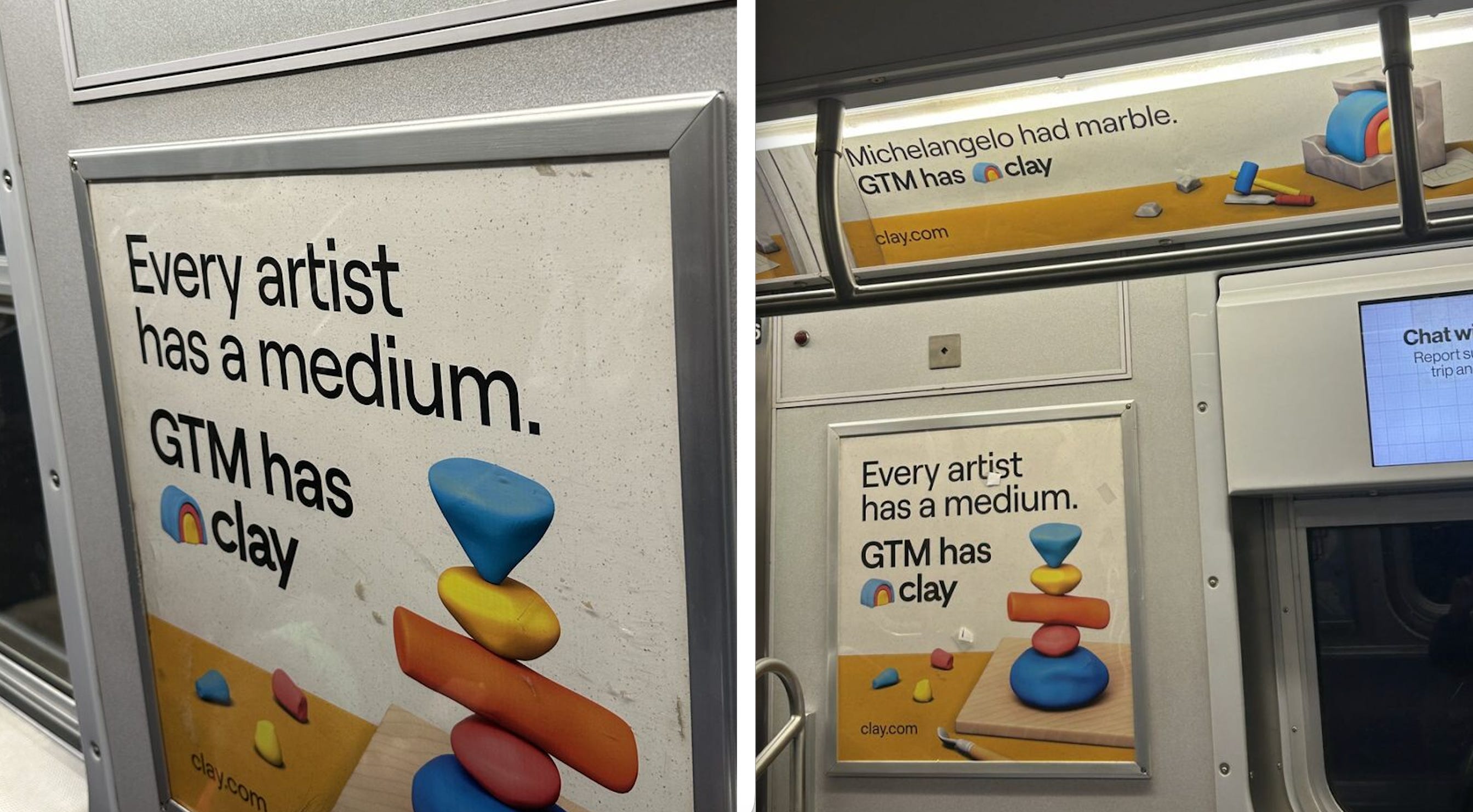
If you’ve been in the New York subway lately, you’ve probably seen a lot of Play-Doh. Clay ads are everywhere, promising automated lead generation, data enrichment, and personalized outreach for B2B. GTM for companies is getting a lot smarter. We’ll see the same thing happen for consumer purchases.
We each leave behind a lot of data exhaust. AI is uniquely good at synthesizing that exhaust into a living, breathing profile of who you are, what you want, and when you’re most likely to act on what you want. Your browsing history, your purchase patterns, the creators you follow, the clips you linger on before scrolling… These all feed into an engine that makes your next ad or short-form video or landing page. I haven’t been influenced by Clavicular yet (let’s hope never) but if I am, chances are it’ll be because I responded to a different clipped video than you did.
This can all sound a little dystopian; we just got done with a decade of privacy concerns from Big Tech. Those concerns are valid. But better personalization also means less irrelevant noise and more tailored, specific recommendations. A lot of dermatology ads focus on women with skin problems I’ve never heard of; I know I’d rather see an ad from a company like Honeydew that shows someone who looks like me and has the same skin problems as me.
We’re seeing a lot of startups building better personalization for marketing, reinventing the CMO suite; and we’re seeing a lot of our companies (both B2B and B2C) hustle to learn new playbooks that lean on better segmenting and data. The best marketing is the kind of marketing that doesn’t seem like marketing, and AI makes that a hell of a lot easier to pull off.
Final Thoughts: The Tension Between Noise & Narrative
When I think about clipping and segmentation and personalization, I think about noise. The sheer volume of content is exploding, all in an effort to monopolize attention. The noise playbook is a playbook that most brands and companies will have to run.
But noise runs orthogonal to narrative: a clean, cohesive, one-liner story for a product or service. In January’s Oxygen Monopolies, we talked about startups that are sucking up the oxygen in their category. Harvey is a famous example, becoming synonymous with legal AI. In today’s environment, narratives form and calcify faster than ever, and good narratives are simple—e.g., “Harvey = AI for law firms.”
In more crowded markets teeming with clipped content and generative ads, coherent narratives become more and more important. Buyers are wary and weary of muddled messaging; anyone selling something should have a crystal-clear value prop and one-liner.
This is the tension facing the CMO in 2026, one I don’t envy. On the one hand, you need a brand that’s simpler than ever and easy to recall. On the other hand, you need to be playing the noise game, creating ever more niche, sliced, segmented marketing content. How do you thread the needle between those two truths?
The narrative is the foundation and noise is the distribution layer. You need the one-liner: Harvey = AI for law firms, Honeydew = online dermatology, Clay = data-driven GTM. Then you fragment that narrative into a thousand surface-area touches, each tailored to a different audience, platform, and moment in time. The narrative through-line remains the same, while the packaging changes.
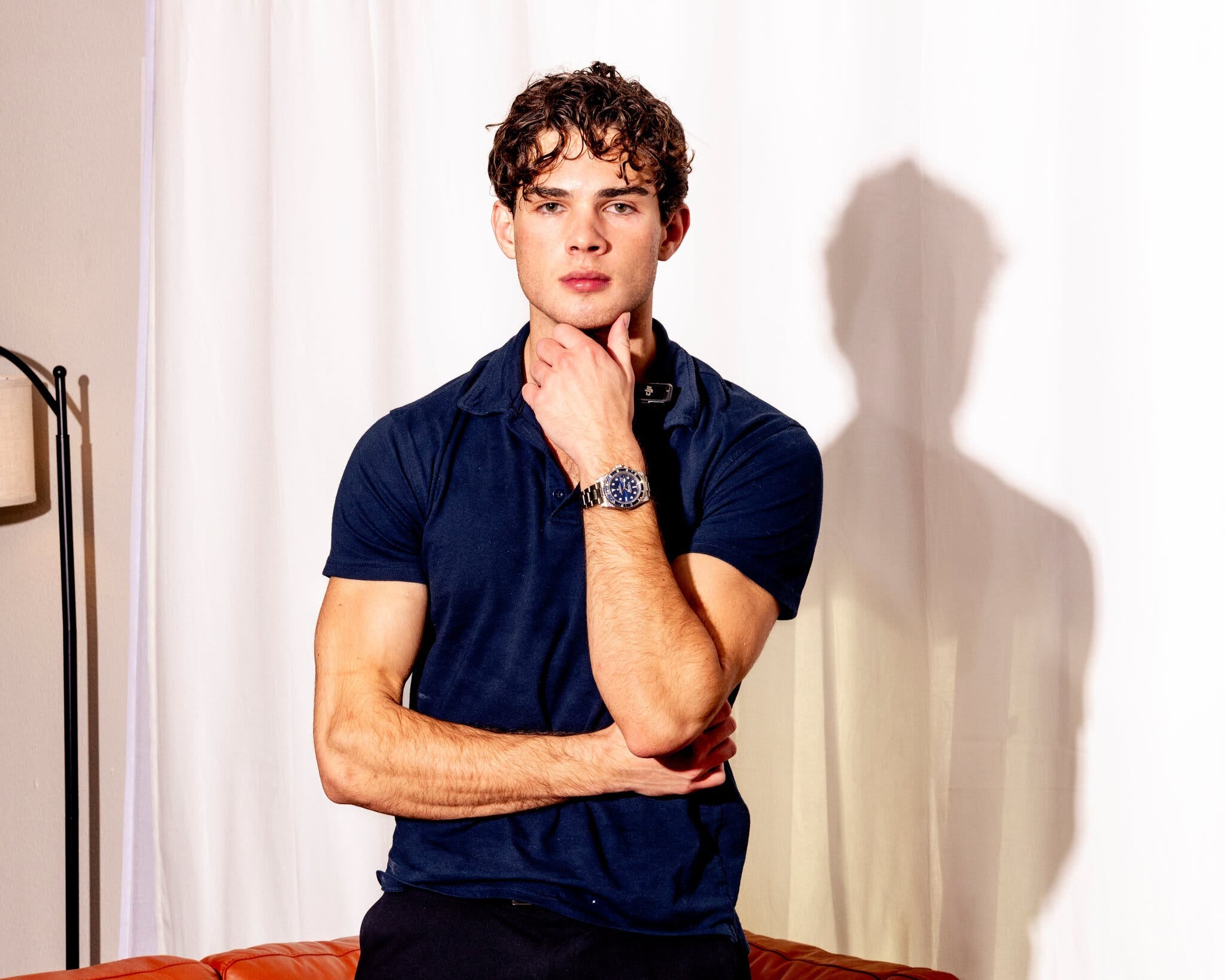
Clavicular is actually a good example of someone doing this well. The narrative is clear: this guy will teach you how to look better. But the distribution of that narrative is fragmented into 645 clippers and 34,667 videos, each a slightly different cut and hook, optimized for a slightly different audience. The 17-year-old who’s been watching jawline exercises on YouTube sees Clav talk about bone smashing (yes, it’s a thing); the 37-year-old curious about peptides sees Clav talk about “the Wolverine stack.” The brand is coherent even as the content is anything but.
The companies getting this wrong are the companies that let noise overpower the narrative; they chase so many micro-segments that the core message dissolves. You see this with startups that have different messaging on their website than on LinkedIn than in paid ads. Segmentation should serve the narrative rather than undermine it. The companies getting it right play the volume game, but with an incredibly disciplined approach that funnels back up to the same foundational narrative.
Being a CMO is uniquely hard right now. We’re seeing a cleaving of the CMO suite into noise and narrative, and the challenge of the next decade will be walking the tightrope between the two.
Thanks for reading! Subscribe here to receive Digital Native in your inbox each week: