

Writing about how technology and people intersect. By day, I’m building Daybreak to partner with early-stage founders. By night, I’m writing Digital Native about market trends and startup opportunities.
If you haven’t subscribed, join 70,000+ weekly readers by subscribing here:
Daybreak: Announcing $100M in New Funds
This morning we’re announcing $100M in new funds: $75M for our second core Daybreak fund, and $25M for an opportunistic vehicle we’re calling Daybreak Meridian. Our goal remains the same: be a founder’s first check (ideally their first “yes”) and then keep backing them as they scale.
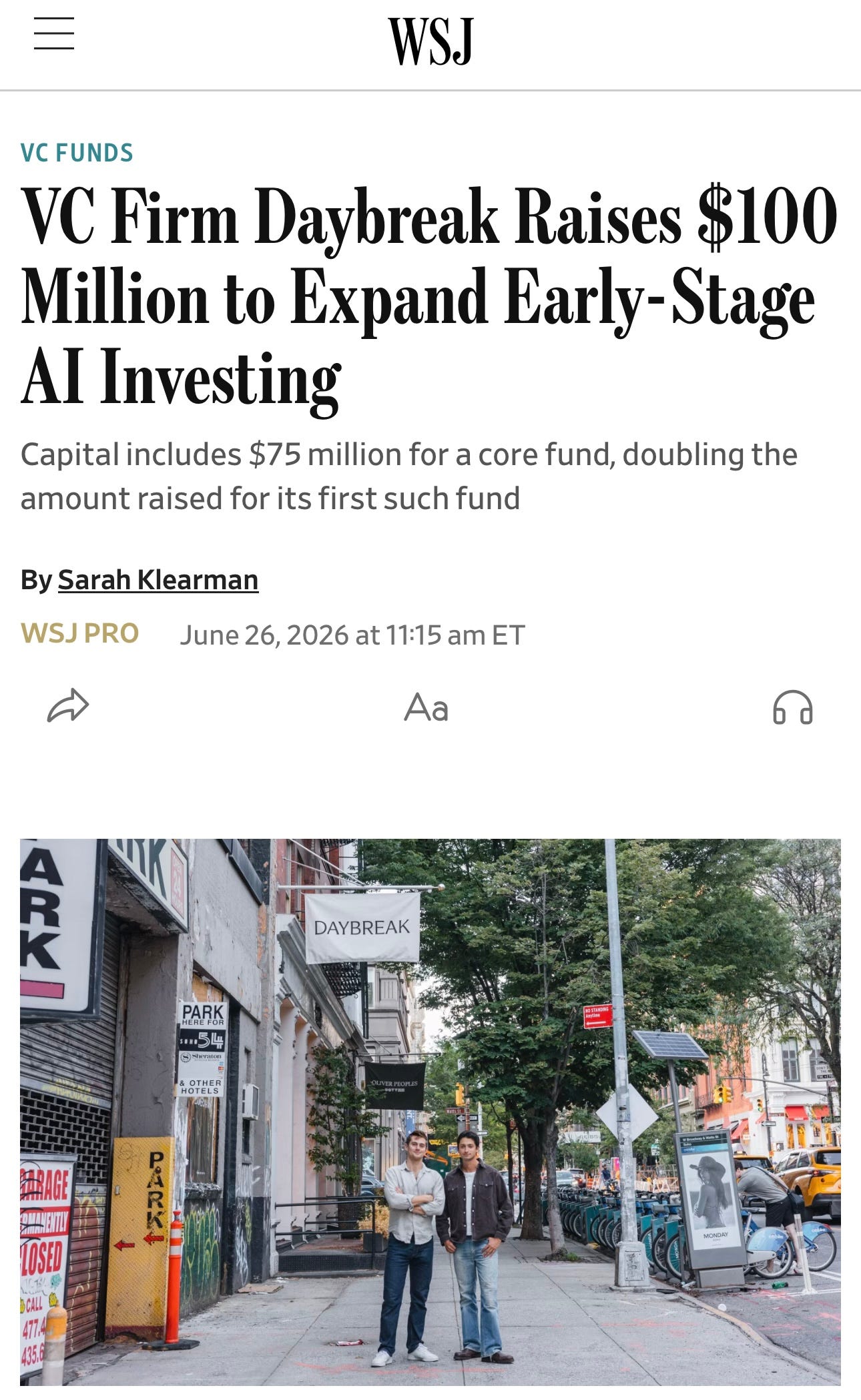
The goal from the beginning has been to build Daybreak in public: venture is too much of a black box, and our industry could benefit from some transparency. Building in public also forces discipline and intellectual honesty. I wrote this piece 15 months ago when we announced our $33M debut fund, and I wanted to write another piece as we launch Fund II.
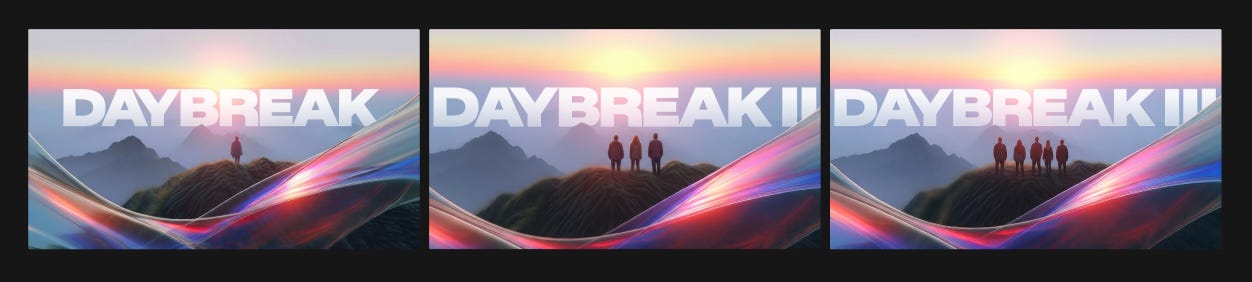
The cover of our Fund I deck was an image of a person overlooking sunrise, which I made in Midjourney. Looking back now, it’s a little…lonely. Daybreak began as a one-man-band, but always with the intention of growing. We’re now a partnership of two, with Jared joining earlier this year, and our goal is to add ~1 partner per fund until we’re ~3-5 partners at scale. We feel strongly that venture is best done with a small partnership, and we’ll never be a huge team.
The Fund II deck had a less lonely cover (shown in the middle here), and I expect our Fund III deck will continue the trend:
Here’s the slide that followed in our Fund II deck:
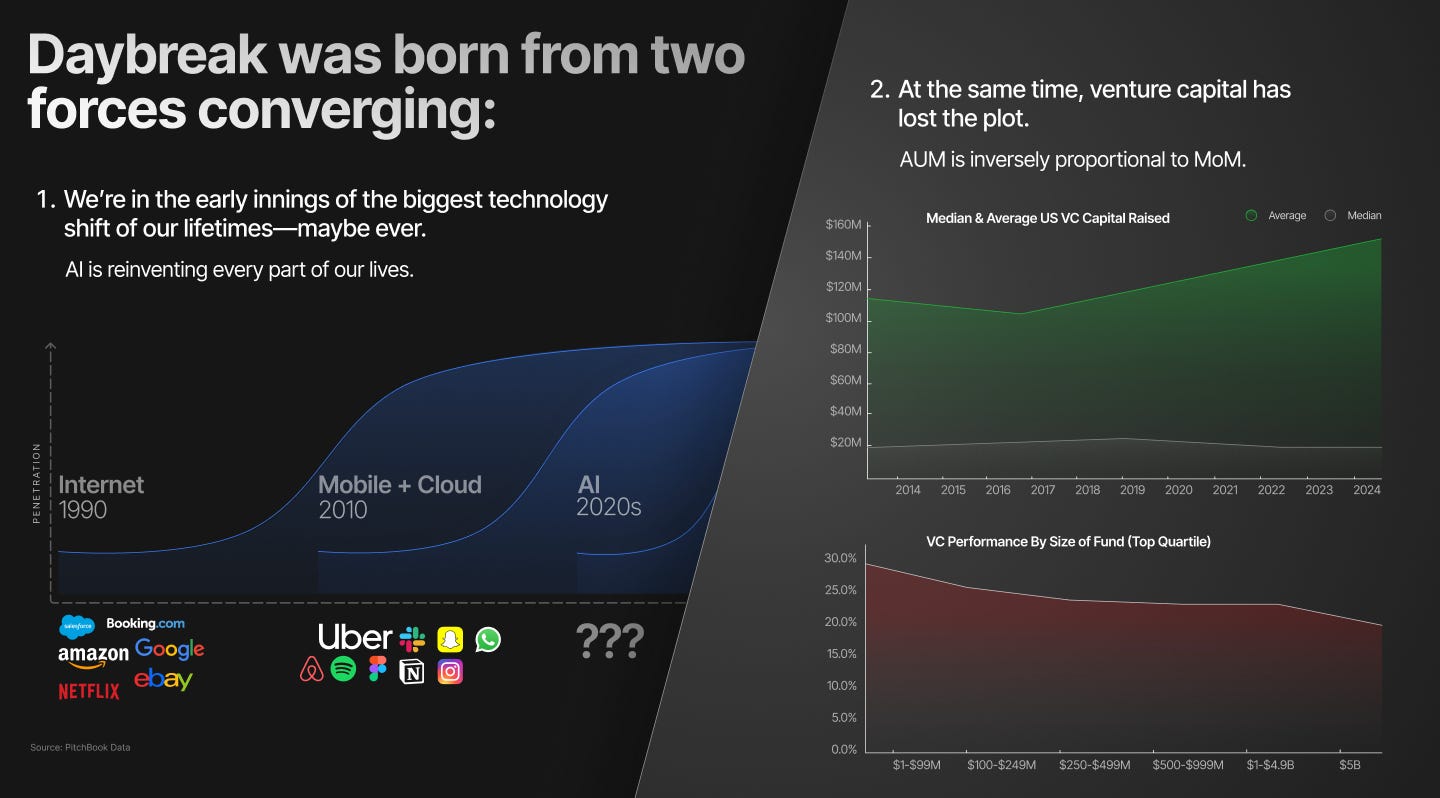
Both of these forces are familiar Digital Native topics. To quickly touch on each:
Technology Shift
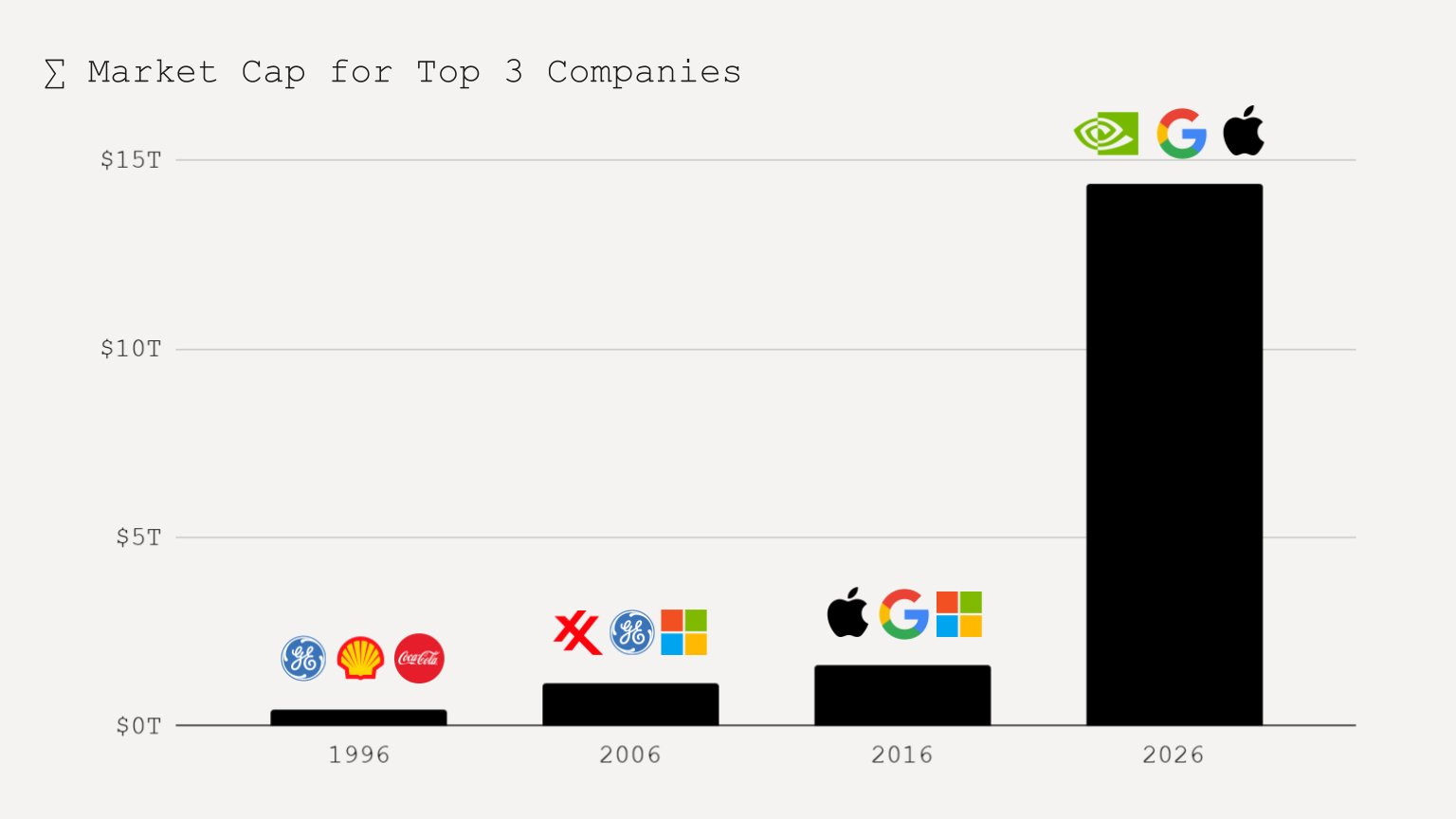
Technology continues to eat the world. I saw the chart below on Twitter recently, and it’s stuck with me. Less than eight years ago, in August 2018, Apple became the first company to hit a $1T market cap. Today there are 14 companies with a $1T+ market cap, and the biggest companies are worth $5T. It’s only a matter of time until we have the first $10T company (it’ll probably be Nvidia, Apple, or Alphabet, but dark horses include Anthropic and SpaceX).
With companies growing larger and larger, the power law becomes even more dramatic. You have to be in the handful of companies that matter. Yet early-stage venture remains more art than science: how do you pick the right companies? Alfred Lin recently tweeted the three images below; can you pick out the winners from the sea of logos? Time will tell which AI logos stand the test of time.
Industry Shift
This is the most thrilling moment in technology history, and the pace of innovation continues to increase. Yet venture as an industry has “industrialized,” swapping craft for AUM. Some of this was inevitable: private markets are swelling, outcomes are bigger than ever, and fund sizes must increase to keep up. This all makes sense, and it’s not inherently bad. But should we keep calling it venture capital?
Some parts of our industry more resemble public markets investing than the original craft of early-stage venture. And as venture has matured, new firms have struggled:
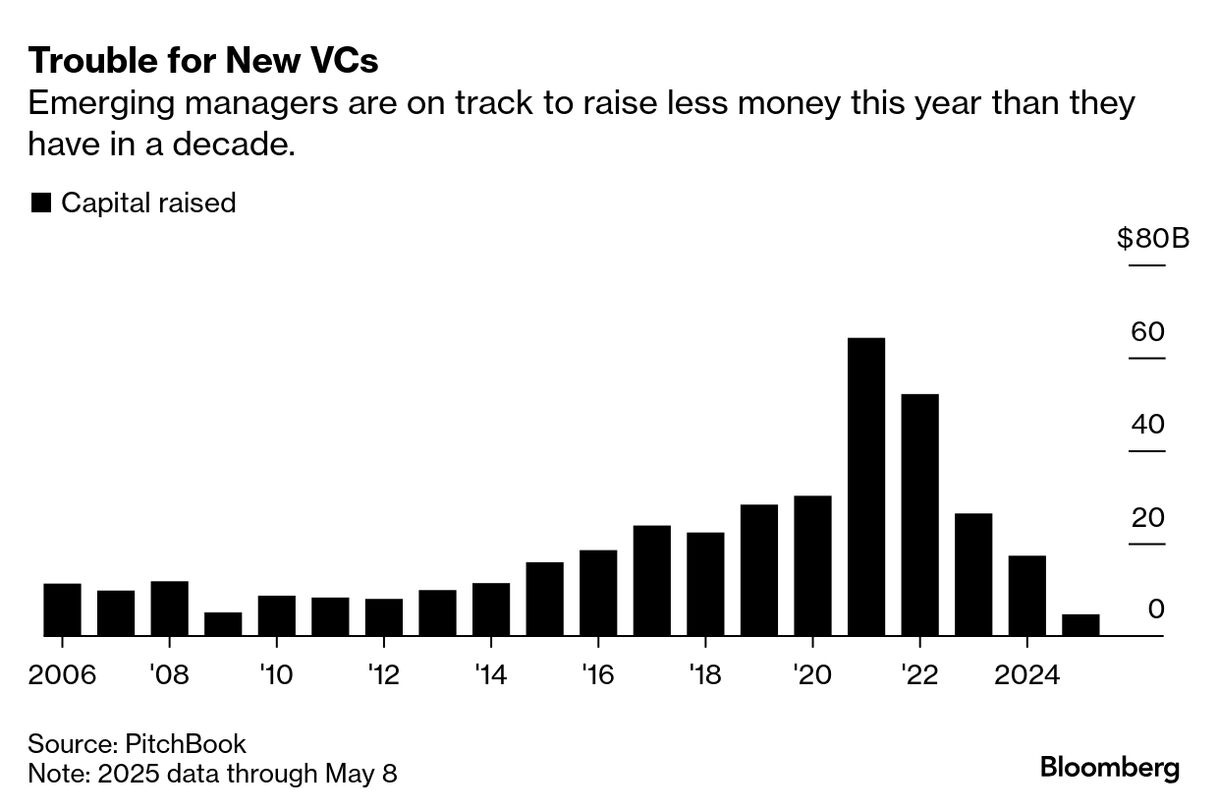
LP dollars are concentrating in a handful of names: 75% of dollars last year flowed to 30 firms, 50% of dollars to just 10. The big are getting bigger, and “emerging managers” haven’t gotten much traction. This dynamic is bad: it’s the opposite of what’s best for founders.
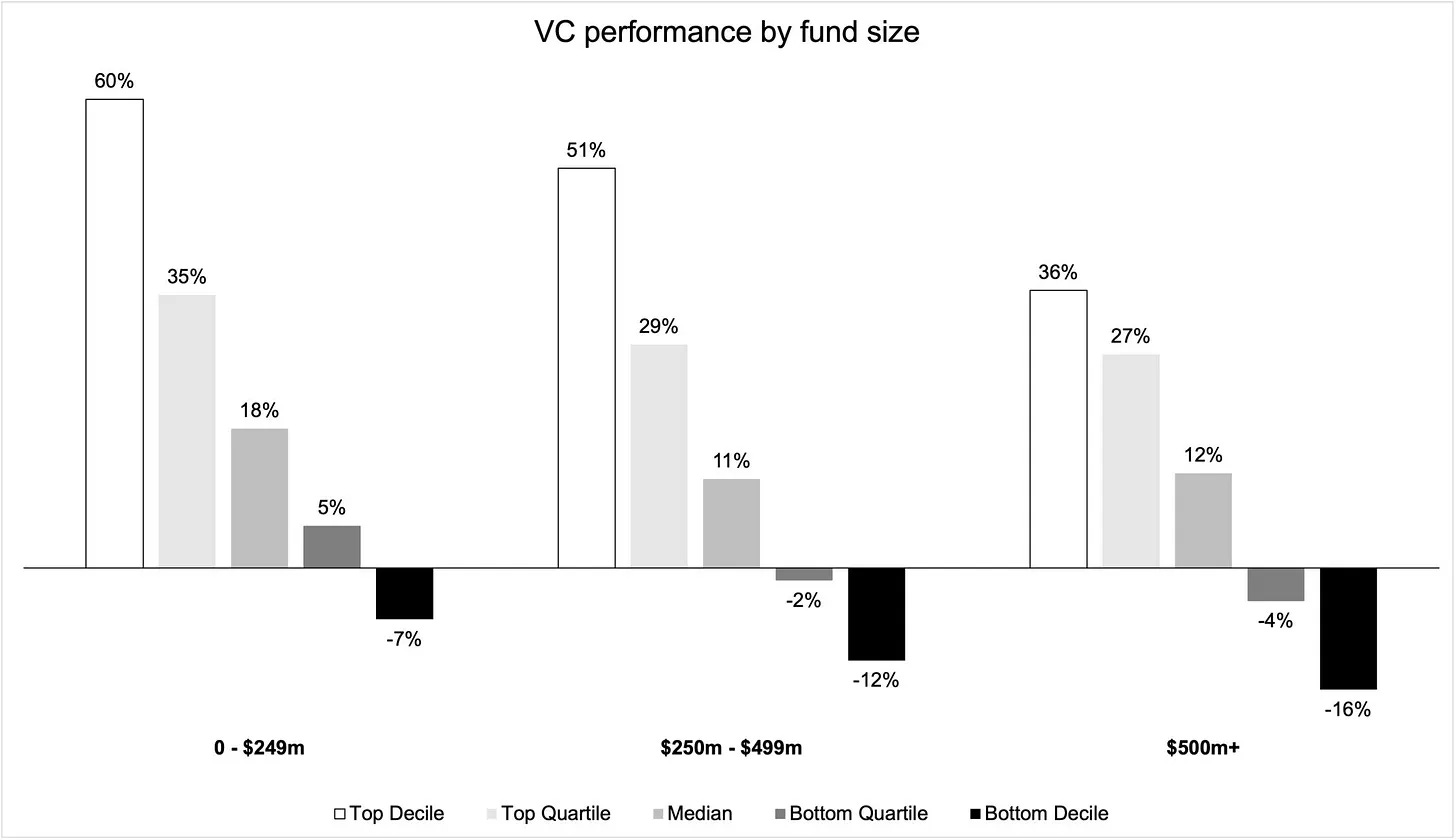
While venture will continue industrializing, I expect LPs and founders will become more judicious. From the LP perspective, you have trust the math: top decile for <$250M funds = 60% IRRs, while top decile for $500M+ = 36% IRRs. The data is well-proven.
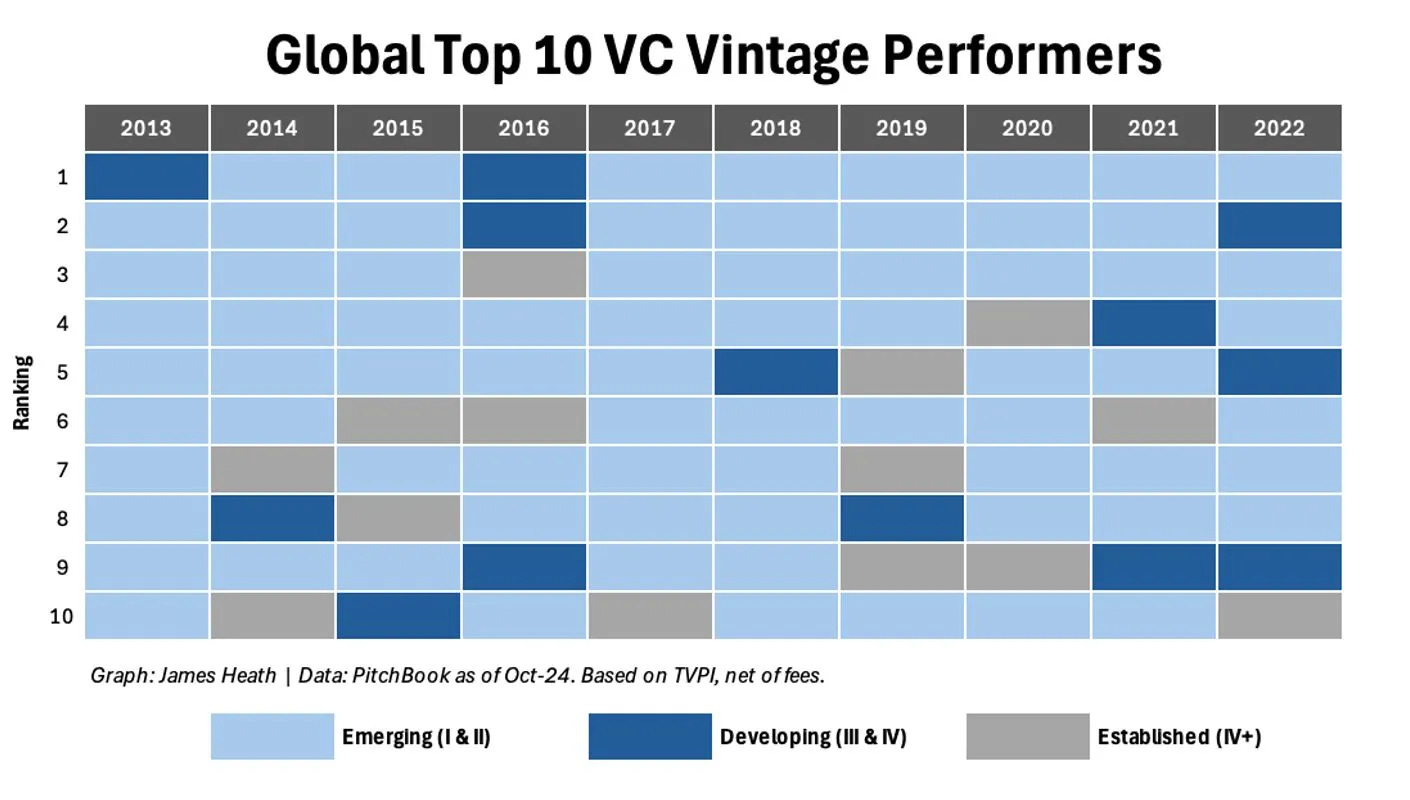
Here’s an impressive stat: more than half (55%) of top decile VCs in the last 10 years are Fund Is. 73% are Fund Is or Fund IIs.
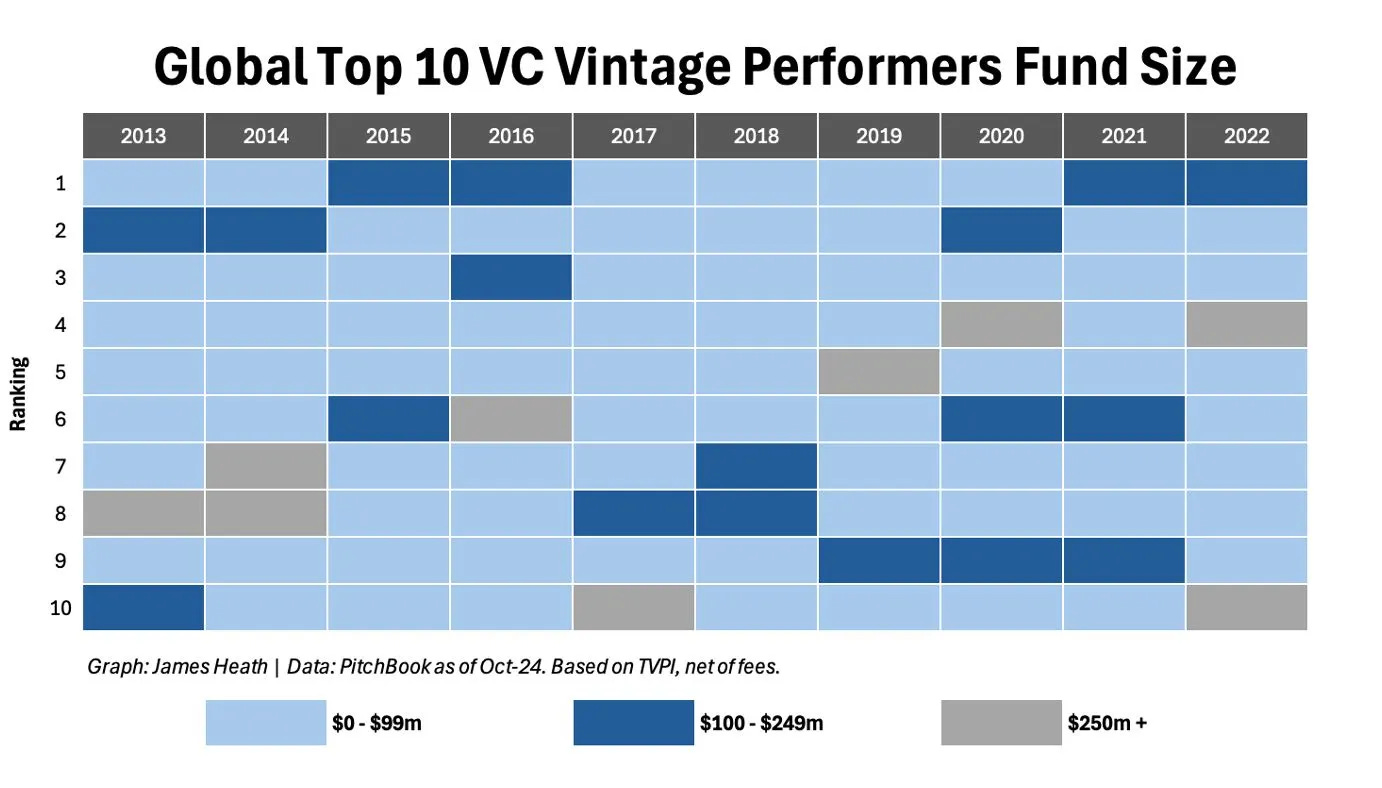
And over the past 10 years, 91% of the best-performing VC funds have been under $250M in size; 73% are under $100M.
Trust the math. I expect more LPs will realize this as the industry continues to cleave into artisans vs. asset managers. Some allocators want to put massive dollars to work and target 10-15% IRRs; there’s a place for that. Others will seek true “venture-like” returns—with more risk, yes, but also with more upside.
And from the founder perspective, more founders will recognize the benefits of working with a stage-specialist at Seed. Doing so means a different level of partnership, which brings us to…
How We Operate at Daybreak
Finding product-market fit requires a different type of partner than scaling a business: a partner with specific knowledge on early-stage company-building, with time and attention, with aligned incentives. Our core belief at Daybreak is that venture is a services industry, and any VC worth their salt will tell you services don’t scale. Jared likes to say “we work our founders’ hours” and that we’ll pick up the phone day or night.
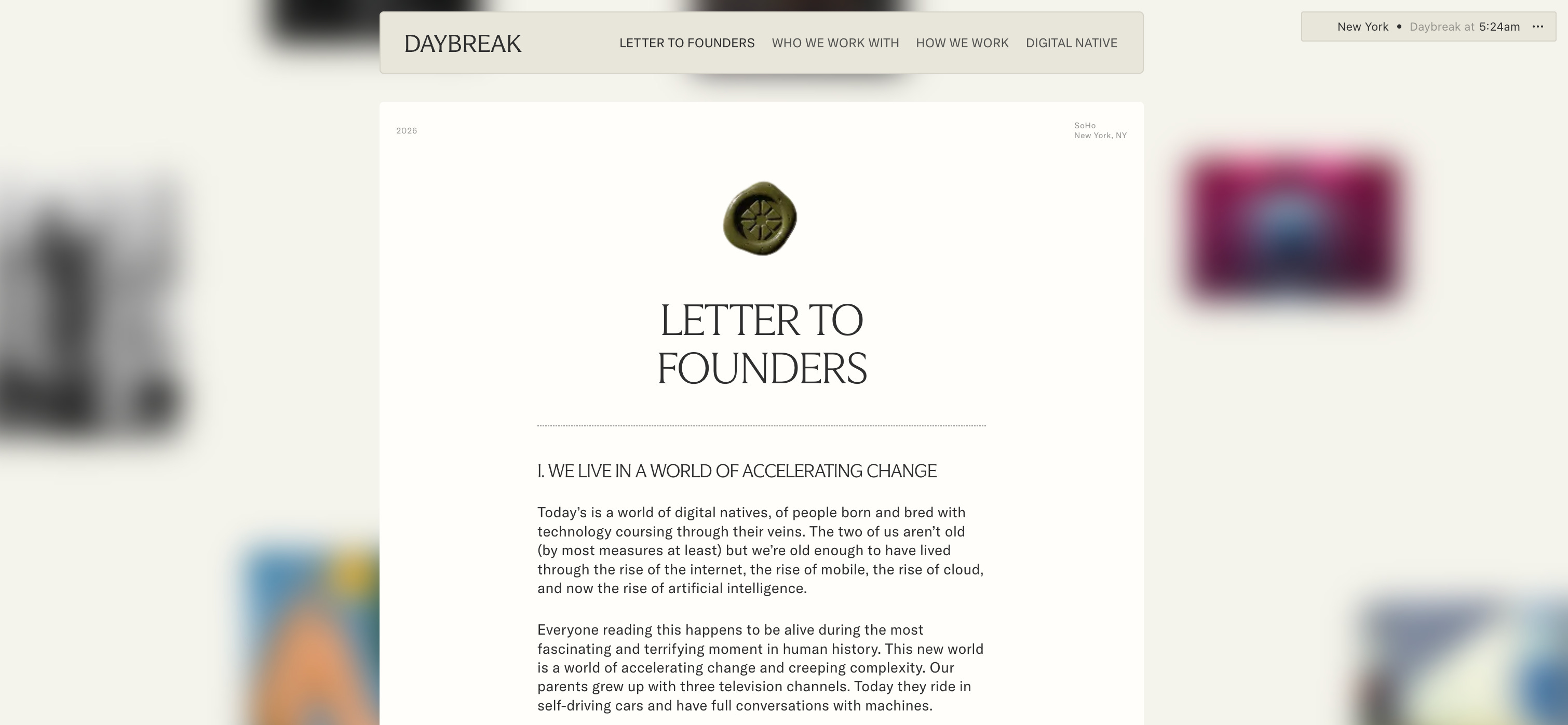
The Letter to Founders on our website shares more on our worldview:
We believe that first-check investing is about finding special, spiky people. It’s not much more complicated than that. “N of 1” founders exist across industries, and we’re fairly sector-agnostic at Daybreak. In Fund I, we have companies applying AI to healthcare, to law, to insurance, to restaurants. We have companies in peptides, in code generation, in telecom, in animal health. We invest across markets and geographies, instead looking for two things: (1) ideas/business models that can underpin $1B+ in revenue if they work, and (2) AI-pilled founders who are strategic and high-velocity.
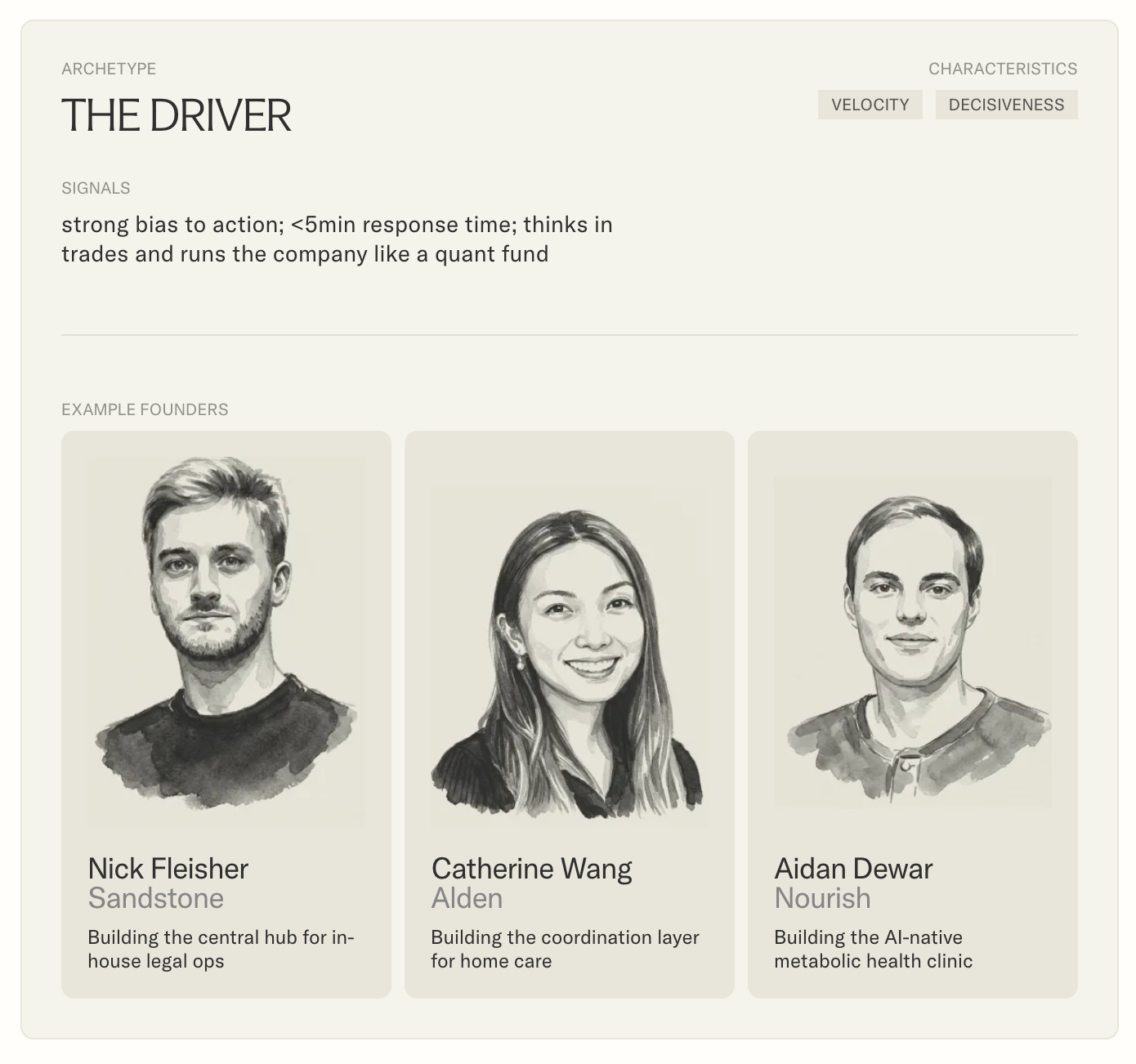
Internally, we talk about founder archetypes. Some of these archetypes now live on our website: The Missionary, The Savant, The Driver, The Nonconformist. Many of our best founders have flavors of more than one archetype, but these rough segmentations are a helpful mental exercise.
An example below from The Driver, which includes some founders and companies we’ve covered in Digital Native: The Year of Invisible AI (Sandstone), The Decade of Consumer Health (Nourish).
Once you back the right founders, the goal becomes to help improve the odds of success. The best founders don’t really need VCs; if we vanished from Earth, these founders would probably still build large companies. Instead, the job is to relentlessly pursue inflection points—specific ways to tilt upward the trajectory of a business.
Inflection points tend to be things like sourcing a founding engineer or an early customer. We’ve brought in a few dozen customers and hires to our companies in the past 12 months. Inflection points might be a unique insight on pricing or go-to-market. Or they might be more basic: we’ve introduced co-founders and we’ve named two of our companies. Partnership also extends beyond the major inflection points to the mundane and day-to-day: last month, my partner Jared helped a founder get out of jury duty so he could keep building. How many VCs can say that?
Daybreak in 2026: Fund → Firm
Our theme of the year is to go from fund to firm. We’re growing up! This year is about laying the foundation for a firm that will (hopefully) be around for a very long time.
Bringing on Jared was the first step ✅ .
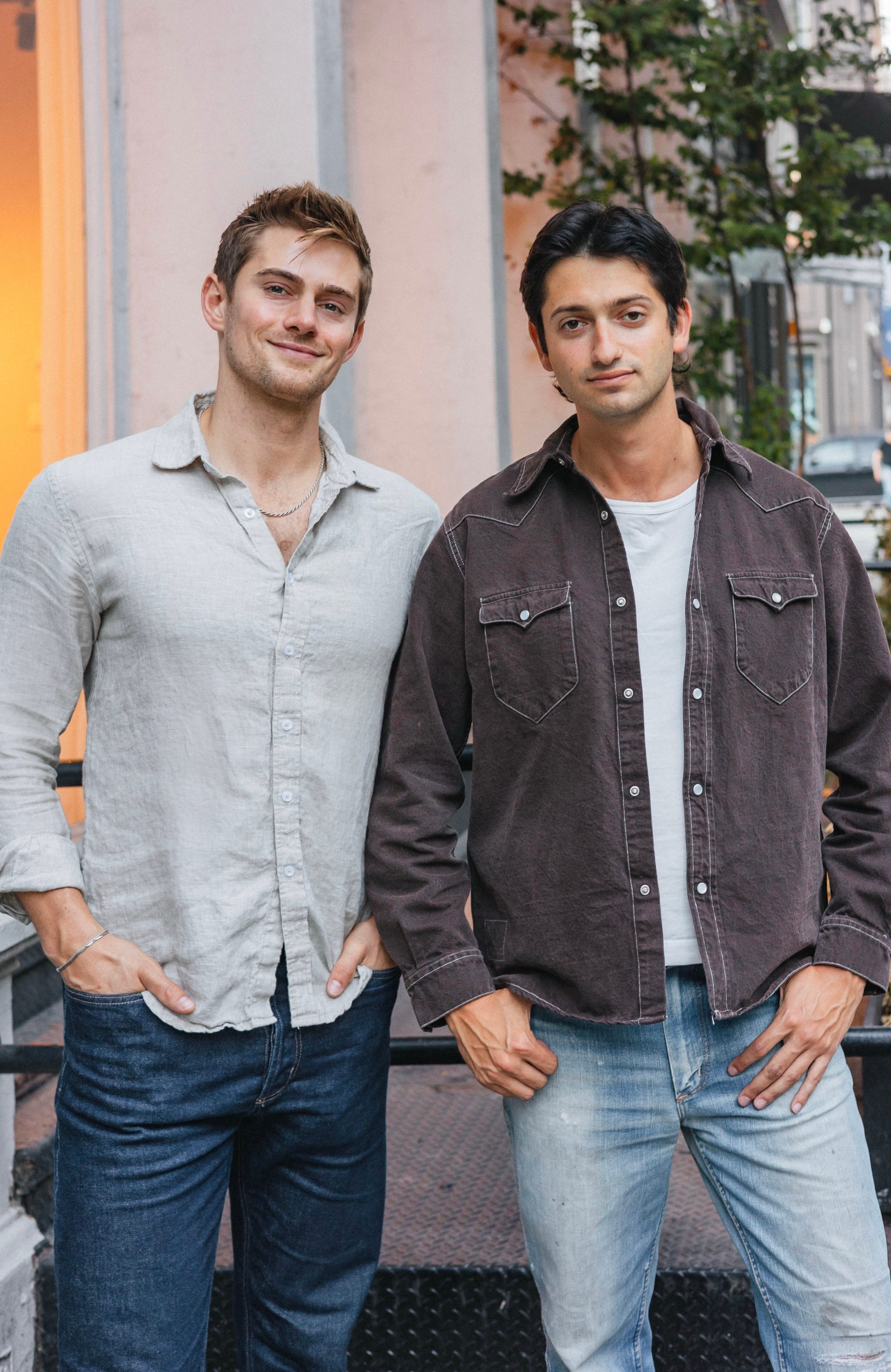
Next up is opening our office in SoHo. We just got a new space, and we intend to make it the place for New York technologists, creatives, and builders to gather. We have a few of our founders working out of the space (which we hope feels more studio than office) as well as a few future founders ideating. This summer, I get to moonlight as an interior designer (which, for anyone who knows me, has long been a passion).
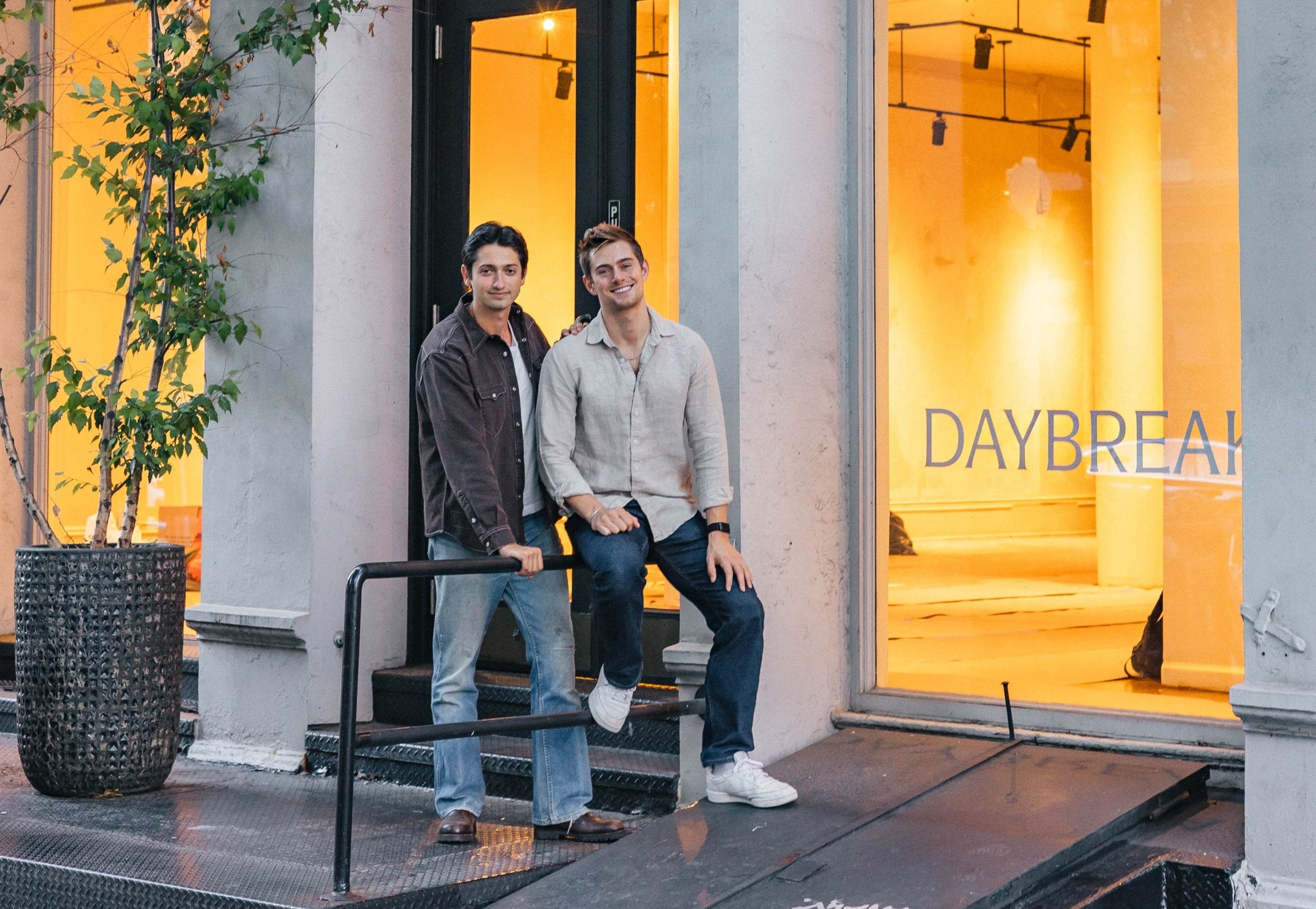
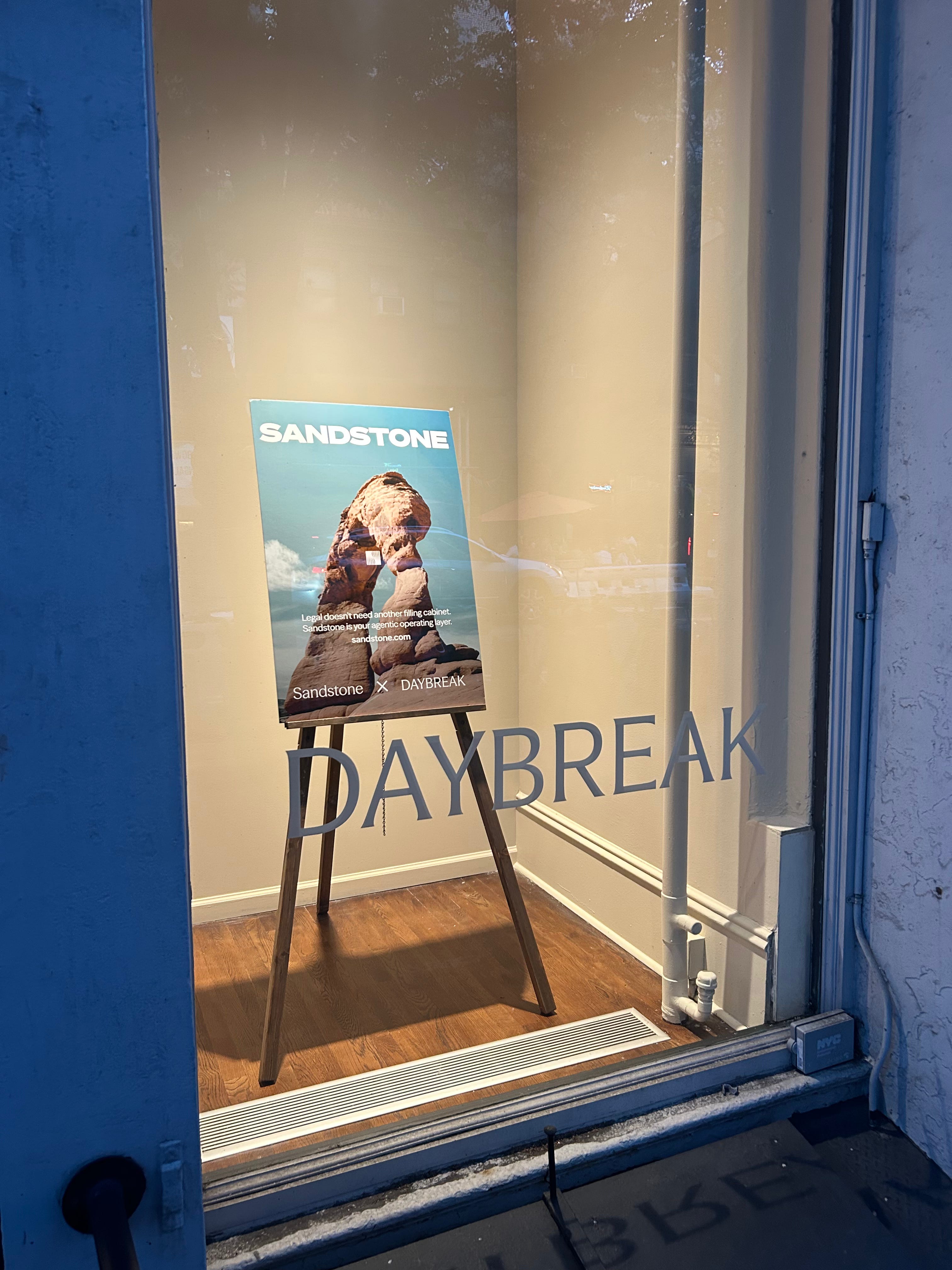
We also have an easel up in our window that will feature one Daybreak portfolio company each month. For the month of June we’re showcasing Sandstone, to coincide with their announcement of a fresh $30M Series A led by Lightspeed. If you needed a reason to walk down West Broadway once a month, there ya go!
Also: we’re going to grow our team. We’re kicking off a search for Executive Operations, someone to essentially keep the trains running at Daybreak, overseeing the office and day-to-day firm operations. If you know someone who might be a fit, please drop me a line (rex@daybreakventures.com 📬)
Final Thoughts: “None Are So Old…”
Our website features a Henry David Thoreau quote that I’ve always loved: “None are so old as those who have outlived enthusiasm.” You can make up for a lot in life if you have enthusiasm.
While I’m concerned about the growing AI backlash (see: Why Does Everyone Hate AI?) I remain enormously convicted in technology as a force for good. Life is getting better, and technology + startups are catalysts. We feel thrilled to get to do this job every day, and we feel thrilled to have a fresh $100M for the next chapter.
To never losing the enthusiasm 🌄🥂
Thanks for reading! Subscribe here to receive Digital Native in your inbox each week: